What Are Advanced Kiteboarding Skills?

Advanced kiteboarding skills begin where basic control becomes deliberate, efficient, and adaptable. They involve more than riding faster or jumping higher. An advanced rider reads wind shifts, studies water texture, and adjusts edging pressure before the kite reacts. Small corrections matter. A few centimeters of bar movement can change height, speed, and landing stability.

This level includes controlled transitions, powerful carving, board-offs, rotations, and technical jumps. Each movement requires timing between the kite, board, body, and changing wind. Experienced riders also understand relaunch procedures, weather development, equipment limits, and safe distance from other water users. Training with a qualified instructor remains valuable, especially when practicing unhooked maneuvers or higher-risk aerial techniques. Skill should never replace judgment.

Real progress often looks less dramatic than social media suggests. A clean landing in choppy water may show deeper ability than a spectacular trick. On difficult days, even advanced riders make poor timing decisions. I still find that rushing a rotation creates unnecessary instability. That weakness deserves attention, not excuses. Video review, structured drills, and honest feedback can reveal habits that feel invisible during a session.

Advanced kiteboarding skills are therefore built through repetition, observation, and responsible choices. Riders should increase difficulty gradually, check their equipment, and respect local guidance and weather warnings. Confidence has value. Overconfidence does not. The strongest performance combines technical precision with calm awareness, leaving enough control to respond when conditions change unexpectedly.

What Are Advanced Kiteboarding Skills?

Core Knowledge and Prerequisites for Advanced Kiteboarding

Advanced kiteboarding begins with disciplined fundamentals, not bigger jumps. Riders should hold a reliable edge, ride upwind, stop safely, and relaunch without panic. Self-rescue must feel practical in cold water, strong wind, and poor visibility. The International Kiteboarding Organization’s safety guidance emphasizes wind assessment, equipment checks, and emergency procedures before every session. These skills require repetition. Confidence alone is not evidence.

Experience also means reading changing conditions. Study cloud movement, gust patterns, currents, launch space, and possible landing areas. The Outdoor Industry Association’s 2024 Participation Trends Report recorded 175.8 million U.S. outdoor participants in 2023, but it does not measure advanced kiteboarding directly. That limitation matters. Industry participation figures can show interest, not competence. A peer-reviewed review in Sports Medicine identifies lower-limb, trunk, and impact injuries as common kiteboarding concerns. Strong legs, mobile shoulders, and controlled landings deserve serious training.

Tips: Practise self-rescue in calm water. Film one session. Review your kite position, body angle, and landing timing. Do not chase height when your emergency skills remain slow. A qualified instructor can expose mistakes that feel invisible. I still find weather judgment difficult near unfamiliar beaches. That is normal. It should encourage slower decisions, not reckless confidence.

Advanced Kite Control, Board Handling, and Edge Management

What Are Advanced Kiteboarding Skills?

Advanced Kite Control, Board Handling, and Edge Management

Advanced kiteboarding begins with control that remains calm when the wind shifts. Experienced riders steer through small wrist movements, not large arm pulls. They watch kite position, line tension, and water texture together. Before launching, I check the bar, lines, release system, and landing area. This routine feels repetitive, but skipped checks create serious problems. In gusty wind, I guide the kite slowly and keep my shoulders relaxed. A high kite can lift unexpectedly. A low kite can drag the rider across the surface. Advanced control means adjusting early, before the mistake becomes dramatic.

Board handling becomes more precise as speed increases. I keep my front knee soft and move my hips over the board’s centerline. Small pressure changes help maintain direction during jumps, transitions, and uneven water. When landing, I look toward the exit line instead of staring at the board. That habit improves balance and prepares the body for the next movement. I still rush some landings when conditions become exciting. That mistake reminds me to slow the setup, not force the trick.

Edge management connects kite control with board movement. A strong edge creates resistance and converts power into controlled acceleration. I press through the heels, keep the torso tall, and avoid bending only at the waist. Releasing the edge too suddenly can send the board downwind. Holding it too long can stall the kite’s pull. Skilled riders read the surface continuously, especially near chop and shore break. Practice with an experienced instructor helps refine these decisions safely.

High-Performance Transitions, Turns, and Riding Techniques

Advanced kiteboarding skills begin with control, not height. High-performance transitions demand precise kite timing, firm edge pressure, and quiet shoulders. During a toeside-to-heel-side transition, experienced riders release edge pressure gradually, guide the kite through the zenith, and land with bent knees. The board should touch down softly, not slap the water.

Turns require stronger awareness of wind angle and body position. A carving downloop turn can generate sharp acceleration, especially in gusty conditions. Riders should enter with moderate speed, keep the kite predictable, and look toward the new riding direction before changing stance. The Outdoor Industry Association’s 2024 participation report recorded 175.8 million American outdoor participants in 2023, but participation figures do not measure technical readiness. That distinction matters. More time outside does not automatically create better judgment.

Tips: Practise one transition at a time. Film short runs from shore. Check kite position, board angle, and landing balance. A 2024 World Health Organization guideline supports 150–300 minutes of moderate weekly activity, yet kiteboarding intensity changes quickly with wind and water. Use shorter sessions when conditions become demanding. I still find that rushed rotations expose weak technique. Slow repetition often builds cleaner muscle memory. Leave space for mistakes, but never practise advanced moves near swimmers, obstacles, or crowded launch areas.

Jumping, Aerial Maneuvers, and Landing Control

What Are Advanced Kiteboarding Skills?

Jumping, Aerial Maneuvers, and Landing Control

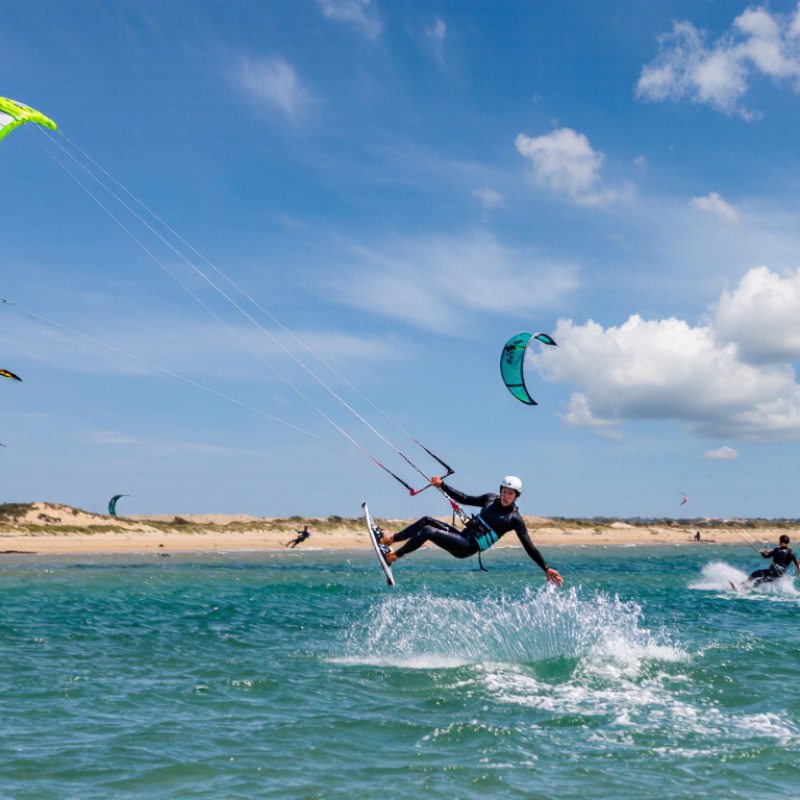
Advanced kiteboarding begins when a basic jump becomes deliberate rather than accidental. Before leaving the water, riders check wind strength, space, and their landing zone. A progressive edge loads the board without forcing the legs. Then, a small steering input lifts the kite smoothly. Experienced riders keep their eyes on the landing area, not on the kite alone. That habit improves body awareness.

Aerial maneuvers require timing, balance, and controlled rotation. During a grab, the rider keeps the bar steady and brings the knees toward the chest. For a spin, the head and shoulders initiate movement before the hips follow. The kite should support the maneuver, not pull the rider through it. I still see riders over-rotate because they rush the second half. Slower practice often creates cleaner results. Start low.

Landing control separates a stylish jump from a risky one. As the board descends, the rider watches the surface and prepares both feet together. A gentle kite adjustment softens the drop, while bent knees absorb impact. The board should meet the water flat or slightly downwind. If the landing looks unstable, releasing height is wiser than forcing completion. Helmet use, suitable conditions, and supervised practice remain essential. Even skilled riders misjudge gusts. That mistake deserves respect, not repetition.

Safety, Risk Management, and Progressive Skill Development

What Are Advanced Kiteboarding Skills?

Safety, Risk Management, and Progressive Skill Development

Advanced kiteboarding is not simply jumping higher or riding faster. It means controlling decisions when wind, water, and fatigue change quickly. From my experience, the strongest riders check conditions before touching the kite. They study forecasts, tides, launch areas, obstacles, and local access rules. A clear exit route matters more than an impressive trick.

Small checks prevent serious mistakes. Inspect lines, connections, the quick-release system, and kite fabric. Wear suitable flotation and impact protection. Tell another rider your plan. Never launch near people, hard obstacles, or uncertain space. Gusty wind deserves extra respect. If the wind becomes unstable, land early. Pride can wait.

Progress should be measurable and repeatable. I would practise controlled edging, stopping, upwind recovery, and board retrieval before learning powered jumps. Each skill should work in moderate conditions first. Then add one variable, such as stronger wind or deeper water. Keep sessions short enough to protect concentration. Fatigue changes timing.

I once repeated a manoeuvre after losing focus and treated discomfort as weakness. That was poor judgment. A safer approach is recording conditions, mistakes, and successful attempts after each session. Coaches, lifeguards, and experienced local riders can challenge unsafe assumptions. Their advice is valuable, but it still requires personal judgment. Advanced riding includes knowing when not to progress.

What Are Advanced Kiteboarding Skills? - Safety, Risk Management, and Progressive Skill Development

Progression Stage Core Skill or Capability Required Safety Knowledge Typical Risk Factors Progression Evidence
1. Foundation Controlled kite flying, body dragging, board recovery, and basic water starts. Understanding the wind window, power zones, launch and landing procedures, and the function of the quick-release system. Launching in unsuitable areas, loss of kite control, obstacles downwind, and failure to release under load. Can start, ride a short distance, stop safely, and activate the release system without hesitation.
2. Independent Rider Consistent riding in both directions, controlled stopping, edging, and upwind travel. Weather assessment, right-of-way principles, safe separation from other water users, and equipment inspection. Changing wind strength, crowded launch zones, shallow water, and inadequate distance from fixed hazards. Can select an appropriate riding area, maintain control, return to the launch area, and avoid predictable hazards.
3. Intermediate Control Transitions, toe-side riding, controlled carving, board recovery, and riding in moderate chop. Understanding gust response, current, tide, shore break, and the effect of changing launch and landing locations. Overpowered riding, poor edge control, fatigue, collisions, and misjudging currents or breaking waves. Can complete controlled direction changes and remain composed when conditions become less predictable.
4. Advanced Maneuvers Powered transitions, jumps, grabs, rotations, toeside maneuvers, and controlled landings. Jump-zone selection, downwind clearance, landing-area assessment, impact protection, and emergency release planning. Unexpected landing, excessive speed, hard impact, tangled lines, and insufficient clearance from people or objects. Can repeat the maneuver with controlled height, direction, landing position, and a safe exit strategy.
5. Risk Management Pre-session planning, hazard identification, conservative equipment selection, and dynamic decision-making. Wind direction, forecast uncertainty, visibility, water temperature, rescue access, local rules, and communication procedures. Overconfidence, rapidly changing weather, offshore wind, isolation, cold-water exposure, and pressure to continue. Can explain go/no-go criteria, identify abort points, and change or cancel a session when conditions deteriorate.
6. Self-Rescue Depowering the kite, securing lines, converting the kite into a flotation or sail aid, and returning to shore. Sequence of release actions, line-entanglement avoidance, conserving energy, and signaling for assistance. Line wrapping, separation from the board, cold exposure, offshore drift, and delayed communication. Can perform a self-rescue drill in controlled water and explain when to abandon equipment to protect personal safety.
7. Unhooked or Technical Skills Unhooked riding, technical freestyle, foil control, or wave riding, depending on the discipline. Discipline-specific equipment checks, impact management, shallow-water awareness, and appropriate fall techniques. Reduced recovery options, high load on equipment, shallow-water impact, and equipment-specific failure modes. Can isolate one technical variable at a time and practice within conditions that allow a safe recovery.
8. Expert Practice Adaptable performance across changing conditions, mentoring, spot assessment, and incident prevention. Structured briefings, rescue coordination, equipment maintenance, and continuous review of near misses. Normalization of risk, teaching beyond personal limits, poor group coordination, and complacency. Consistently prioritizes margins of safety, communicates clearly, and helps others make conservative decisions.
Progression principle: Advanced kiteboarding is defined not only by difficult maneuvers, but also by reliable control, accurate risk assessment, effective emergency skills, and the ability to stop before conditions exceed personal limits.
We use Cookies and Google Analytics. We store no personal details. Learn more about our privacy policy.