Why Is China Top in Kitesurfing Technology?
Why is China top in kitesurfing technology? The answer begins with a powerful manufacturing network, but it does not end there. Chinese factories produce kites, control bars, boards, foils, valves, and repair components at impressive speed. Many suppliers also serve international brands, gaining practical knowledge from demanding global specifications.
Kitesurfing technology has advanced through repeated testing on beaches, lakes, and wind tunnels. Engineers study canopy tension, fabric weight, inflation pressure, and bar response. A few grams can change how a kite turns. A small stitching flaw can affect rider confidence. Chinese manufacturers often combine automated cutting with skilled hand inspection, creating a balance between scale and detail.
Cost efficiency matters, yet quality control matters more. Leading companies test materials under strong pulls, saltwater exposure, ultraviolet light, and repeated inflation cycles. Professional riders and product testers provide useful feedback before new equipment reaches consumers. This cooperation helps improve safety, stability, and handling.
The picture is not perfect. “Top” depends on the product, testing method, and rider’s expectations. Some factories still face consistency problems, and rapid production can encourage shortcuts. Independent certification and transparent testing remain essential. This article explores China’s supply chain, materials research, design partnerships, and export experience. It also asks a harder question: can fast innovation remain responsible when performance, durability, and rider safety must develop together?
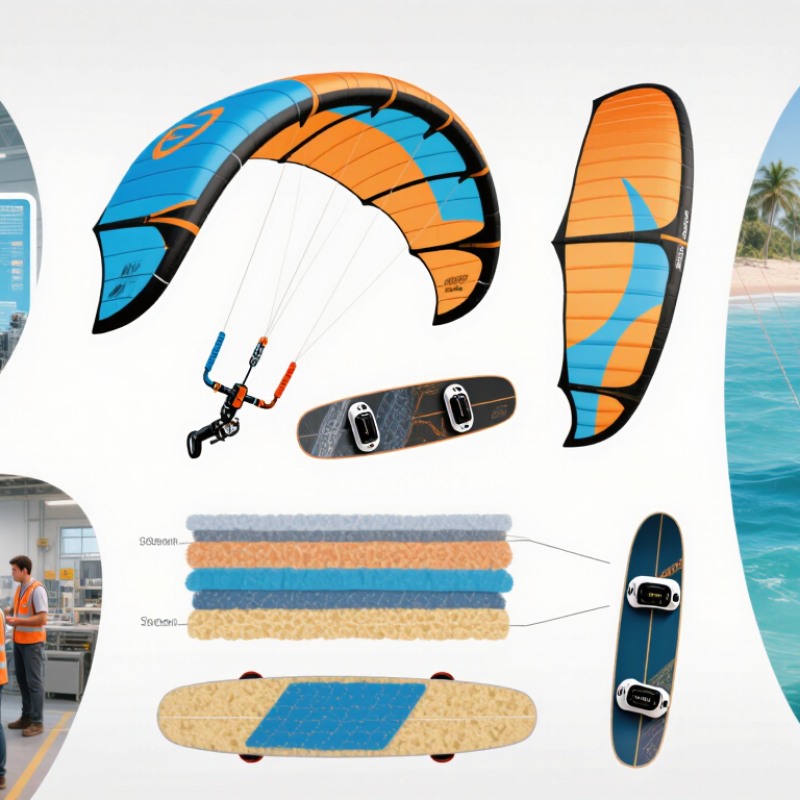
China’s Rise as a Global Kitesurfing Equipment Manufacturer
Why Is China Top in Kitesurfing Technology?
China’s Rise as a Global Kitesurfing Equipment Manufacturer
China has become a major center for kitesurfing equipment manufacturing. Its strength comes from dense supply networks, skilled textile workers, and fast production cycles. A kite may pass through several specialist workshops before final inspection. One team cuts coated fabric. Another sews reinforcement panels and bridle connection points. Small details matter.
Manufacturers increasingly use computer-controlled cutting, tensile testing, and pressure checks. These methods improve panel accuracy and reduce unnecessary weight. Engineers also study how canopy shape affects stability, turning speed, and relaunch performance. In coastal testing areas, riders examine equipment in gusty wind, shallow water, and changing temperatures. The process is practical. Feedback returns quickly to the factory floor.
China’s advantage is not only lower production cost. It is the ability to combine materials, engineering, tooling, and logistics in one responsive system. Local suppliers can adjust stitching density, valve design, or line length without waiting months for overseas parts. Still, quality is uneven. Not every prototype works. Some lightweight designs sacrifice durability, especially around leading-edge seams and attachment points. That weakness deserves honest attention.
The strongest manufacturers now treat reliability as a technical requirement, not a marketing phrase. They document material batches, inspect load-bearing areas, and improve worker training. Independent testing remains valuable because factory confidence can hide practical problems. A kite that looks perfect indoors may behave differently after repeated saltwater exposure. That gap between laboratory control and real riding experience continues to shape China’s next stage of development.
How Chinese Factories Improve Kite Design and Performance
Why Is China Top in Kitesurfing Technology?
China’s leading position in kitesurfing technology comes from efficient factory development. Its advantage is not only large-scale production. Factories combine material research, digital cutting, skilled stitching, and repeated water testing. Designers can adjust a prototype within days instead of waiting through long overseas production cycles. That speed matters.
In a typical development cycle, engineers inspect canopy tension, frame pressure, and steering response. They compare prototype flight records, rider feedback, and pull-test results before changing panel shapes. A reinforced seam near the leading edge may add a few grams, yet prevent twisting during hard turns. Bridle length, line diameter, and valve placement receive similar attention. Small details matter.
Production quality also depends on repeatability. Computer-guided cutting keeps panels close to the digital pattern, while trained workers check stitching under bright lights. Factories may separate incoming material inspections from final inflation tests, reducing avoidable defects. Still, factory efficiency does not guarantee perfect performance. A kite can feel stable in testing but less lively in cold, gusty water. That gap deserves more honest reporting and longer field trials. The best Chinese factories keep improving through this uncomfortable feedback, not by treating every prototype as finished.
Why Is China Top in Kitesurfing Technology?
How Chinese Factories Improve Kite Design and Performance
The chart shows representative operating wind ranges for common modern kite designs. Factory improvements in computer-aided pattern cutting, material consistency, bladder production, seam accuracy, and controlled quality testing help designers achieve wider and more predictable performance envelopes. Values are typical industry ranges in knots and vary with rider weight, board size, kite size, and local conditions.
The Role of Materials, Testing, and Quality Control
Why Is China Top in Kitesurfing Technology?
China’s kitesurfing advantage comes from materials, testing, and disciplined production networks. Ripstop polyester must resist tearing, UV exposure, saltwater, and repeated folding. Bladder films need stable air retention under pressure. Small defects matter. China’s textile and plastics sectors place these materials close to cutting and assembly facilities, reducing transport delays and improving process feedback.
Testing turns raw material into dependable equipment. Factories commonly check fabric tensile strength, seam peel resistance, coating adhesion, valve leakage, and inflation cycles. Some laboratories also simulate sunlight, heat, humidity, and salt spray. These tests reveal weaknesses before water use.
The 2023 ISO Survey recorded 1,079,357 ISO 9001 certificates in China, showing the scale of formal quality-management systems. However, certification alone proves little. A clean document cannot repair careless sampling.
Quality control becomes visible in small details: barcode-based roll tracking, calibrated pressure gauges, controlled curing temperatures, and final inspection under bright light. UN Comtrade data places China among major exporters in the broader sports-equipment category, although that category does not isolate kitesurfing products. This limitation deserves attention.
Industry statistics often combine unrelated equipment, making “top” difficult to measure precisely.
In real production, inspectors still face rushed orders, inconsistent coatings, and occasional human error. Better testing reduces those risks, but never removes them completely.
China’s Influence on the Future of Kitesurfing Technology
China’s influence on kitesurfing technology is moving beyond low-cost production. It is shaping materials, testing methods, and product iteration. The Global Innovation Index 2024 places China 11th worldwide, reflecting strong research capacity and manufacturing depth. China’s National Bureau of Statistics reported 3.33 trillion yuan in research and development spending in 2023. That investment supports better textile coatings, lighter control bars, and more precise hydrofoil machining.
The impact becomes visible on the beach. A modern kite must inflate evenly, resist saltwater, and remain stable during sudden gusts. Chinese factories can test these details quickly because material suppliers, cutting facilities, and assembly lines often operate nearby. Grand View Research’s 2024 kitesurfing equipment report forecasts market growth through 2030, creating pressure for faster innovation and lower replacement costs. The future may bring embedded pressure sensors, recyclable canopy fabrics, and digital systems that record inflation and loading data.
Not perfect yet.
Speed can create weaknesses. Some products still need longer field testing in cold water, strong shore break, and repeated ultraviolet exposure. Factory data does not always equal rider confidence. I may be too optimistic about smart equipment, because extra electronics can increase weight and repair difficulty. China’s strongest influence may therefore come from practical refinement: quieter valves, stronger stitching, safer release systems, and components that work after months of real use. The next breakthrough could be modest, but very noticeable in a rider’s hands.