Kiteboarding materials shape how a kite feels before it ever leaves the beach. The canopy, flying lines, bladder, and reinforcements each affect weight, durability, handling, and repair needs. For global buyers, comparing materials means looking beyond attractive product labels. A light fabric may improve responsiveness, yet wear faster in harsh sun or frequent travel. There are trade-offs.
Veteran kite designer Ralf Grösel offers a useful design perspective. A fair summary of that approach is: “Choose materials for the conditions they must withstand, not just the performance they promise.” This is an editorial summary, not a verified verbatim quotation. It points buyers toward practical questions: What denier is the canopy fabric? Are high-load areas reinforced? How well do seams and coatings resist repeated use? Ask suppliers for specifications and test details.
This guide to the top 10 Kiteboarding materials compares common fabrics, line fibers, bladder films, and structural components. It considers strength, weight, UV exposure, abrasion, repairability, and cost. Feel the samples, if possible. A fabric’s crisp hand can suggest coating quality, but touch alone proves little. Request consistent data across suppliers, and check how each material performs in real riding conditions. Some claims sound precise while leaving out test methods. That deserves scrutiny. Material choice cannot guarantee safety or lifespan; construction, maintenance, and use matter too. The comparisons ahead are a starting point, not a universal ranking.
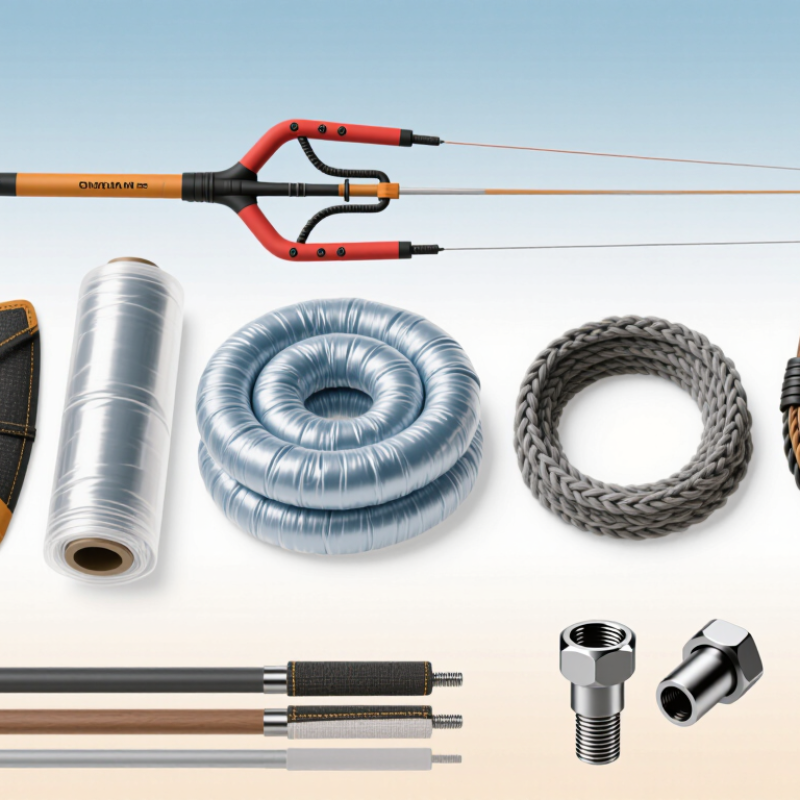
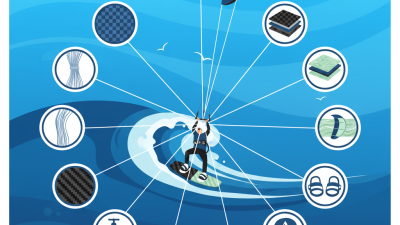
Kite materials: ripstop polyester forms the canopy, while heavier polyester reinforcement supports high-load seams. A thermoplastic polyurethane bladder holds air inside the leading edge and struts. Board materials include Paulownia wood, fiberglass, and epoxy resin. Wood keeps many cores light; fiberglass adds flex, while carbon fiber can increase stiffness. Epoxy bonds the layers. No material is perfect. Textile Exchange’s Materials Market Report 2024 estimates that polyester represented 57% of global fiber production in 2023, underscoring its broad supply base—not its suitability for every kite.
Bar materials include an aluminum-alloy shaft and EVA foam grip. For control and safety, UHMWPE flying lines offer high strength at low weight; nylon webbing is commonly used in safety leashes. Buyers should assess construction, not just material names. ISO 21853:2020 specifies requirements for kiteboarding quick-release systems. A compliant release still needs regular inspection and practice.
Tips: Check stitching near kite attachment points, feel for board-core damage, and inspect lines for fuzzy spots or uneven wear. Pull the quick-release system exactly as its maker directs. Small details matter. A material list alone cannot reveal workmanship, and that is easy to overlook when comparing prices.
For a kite canopy, 40–55 g/m² ripstop keeps the flying surface light and responsive. Dacron reinforcement at 150–170 g/m² is roughly 2.7–4.3 times heavier by area, making it useful where seams and leading-edge panels face repeated load. These figures compare fabric mass, not strength. Coating, weave, thread, and seam design all affect service life.
Ask suppliers for mill test reports showing areal mass measured under ASTM D3776/D3776M and tensile strength tested under ISO 13934-1. Compare results from the same test method; mixed methods can make figures misleading. Check the seams. A 45 g/m² canopy may look clean on a sample roll, yet needle holes or poor coating adhesion can become weak points after repeated folding and salt exposure.
For buyers, inspect both the lightweight panel and the heavier reinforcement, not just the specification sheet. Look for even stitching, smooth transitions between fabrics, and clear batch-level test records. ASTM and ISO methods help make comparisons more consistent, but they do not guarantee a particular kite’s durability. Numbers need context. I would treat fabric weight as a screening measure, then verify construction and test results before ordering.
Ripstop canopy fabrics typically weigh 40–55 g/m², while Dacron reinforcements typically weigh 150–170 g/m².
The bars show indicative material-weight ranges, not exact specifications for every fabric. Actual weights vary with weave, coating, and construction. Compare materials for the same application and check supplier specifications before purchasing.
HMPE flying lines are judged by more than their stated breaking strength. Fiber grade matters: SK75 is a common reference point, while SK78 is often selected for lower creep and improved length stability. Higher-strength grades can allow slimmer constructions, but the finished line’s weave, coating, and splice also affect handling. Grade alone tells only part of the story.
Diameter is a practical trade-off. Many all-around lines fall near 1.3–1.8 mm, though exact specifications depend on the kite and intended loads. Thinner lines reduce drag, but can feel less comfortable to grip and may show abrasion sooner. Check the maker’s load rating, not diameter alone. Small differences matter.
A typical flying-line set measures 20–24 m. Shorter lines can make steering feel quicker; longer lines provide a wider working window, depending on conditions and kite design. Measure all four lines under light, even tension before use. Unequal stretch can cause persistent steering imbalance. I still find length comparisons surprisingly easy to get wrong when lines are wet or loosely laid out. Inspect knots, sleeving, and surface fuzz regularly, and replace damaged lines rather than relying on appearance alone.
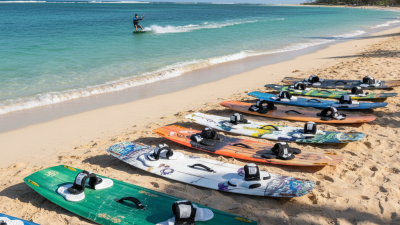
A kiteboard’s feel comes from its core, outer layers, and shaping, not one material alone. Wood cores often provide smooth flex and a lively response underfoot. They can feel forgiving in choppy water, though construction quality and sealing matter. The result depends on the layup.
Feel matters.
Fiberglass laminates offer a practical balance of flex, durability, and cost. They may suit riders who value a less rigid ride and easier replacement costs. Carbon fiber can reduce weight and increase stiffness, but it often costs more and may feel harsh on rough water.
Not always.
Foam-core boards use a lightweight core between reinforcing skins; this sandwich construction can improve stiffness without adding much weight. Check for clean edges, even flex, and signs of separation around the inserts. A careful buyer should compare board weight and intended conditions, not just the material list.
The neatest chart can oversimplify real construction, and personal preference still matters. I would treat any claim of “best material” with caution.
Kiteboarding materials face repeated tension, sunlight, sand, and salt spray. For canopy fabric, compare tear strength, seam construction, and weight together. Denier alone can mislead; a heavier cloth may resist abrasion but make a kite less responsive. Ask suppliers for test results and fabric details, including ripstop spacing and coating type. Small differences matter.
UV resistance deserves specific evidence. Request information on the test method, exposure duration, and retained strength after testing. A UV rating without its method is hard to compare. Check whether seams and reinforcement panels use compatible fabrics, since uneven fading or weakening can create stress points. Look closely at stitching.
For leading edges, evaluate coated woven fabric for tensile strength, abrasion resistance, and coating adhesion. Bladders should remain flexible after temperature changes and repeated inflation; ask how material performance is checked. Lines need reliable load ratings and resistance to UV degradation, while metal fittings need corrosion-resistant finishes. Saltwater is persistent. Rinse and dry gear after use, but do not assume care can fix weak materials. Lab results also miss some real-world wear, especially sand rubbing against folded fabric. Ask for sample swatches, inspect them after saltwater exposure, and compare the supplier’s test conditions with your riding environment.
A practical screening guide to commonly used kiteboarding materials. Ratings are comparative and qualitative, not laboratory results; actual performance depends on material grade, construction, coating, manufacturing quality, and care.
| # | Material | Typical Kiteboarding Use | Strength | UV Resistance | Saltwater Exposure | Durability Considerations | Buyer Specification Checks |
|---|---|---|---|---|---|---|---|
| 1 | High-tenacity polyester ripstop | Kite canopy panels | High for its weight; ripstop reinforcement helps limit tear propagation. | Good relative to many common textile fibers, but prolonged sunlight can still weaken it. | Good; polyester absorbs relatively little water and is generally resistant to saltwater exposure. | Coating, weave quality, seam construction, abrasion, and long-term UV exposure affect service life. | Ask for fabric weight, tear and tensile test methods, coating type, colorfastness, and UV-aging data. |
| 2 | Heavy woven polyester canopy reinforcement | High-load canopy zones, seams, and attachment areas | High; heavier construction can improve load handling where extra fabric weight is acceptable. | Good, subject to grade, dye, finish, and exposure conditions. | Good; inspect the complete fabric-and-coating system rather than fiber alone. | Added stiffness or weight may affect handling; repeated folding can stress coatings and seams. | Confirm weight, weave density, tear strength, coating adhesion, and compatibility with adjacent panels. |
| 3 | Coated woven polyester reinforcement fabric | Leading edges, struts, and other reinforced inflatable-kite areas | High; woven construction and coating are designed for load-bearing inflatable structures. | Good to moderate; performance depends on coating formulation and cumulative sunlight. | Good when the coating remains intact; salt deposits should be rinsed off after use. | Repeated flexing, abrasion, seam stress, and coating wear can reduce performance over time. | Request base-fabric specifications, coating chemistry, hydrostatic or air-retention data, and flex-aging results. |
| 4 | Polyester reinforcement tape | Seams, load-spreading strips, and attachment-point reinforcement | High for narrow reinforcement applications; strength depends on tape width and construction. | Generally good, though exposed tape can degrade with extended UV exposure. | Good; polyester is commonly selected for outdoor textile applications. | Stitching, bonding, edge fraying, and repeated bending influence durability. | Check width, thickness, tensile strength, elongation, edge finish, and compatibility with the panel fabric. |
| 5 | Thermoplastic polyurethane (TPU) film | Inflatable kite bladders | Good puncture and flex performance for a thin bladder film; not a structural flying-line material. | Limited when directly exposed for long periods; the bladder is normally enclosed by the kite fabric. | Good for intermittent exposure, but seams and valves require careful inspection and maintenance. | Heat, folding, abrasion, chemical contact, and aging can contribute to leaks or cracking. | Specify film thickness, air-retention performance, seam strength, valve compatibility, and temperature range. |
| 6 | UHMWPE fiber line | Flying lines and high-load control-system lines | Very high strength-to-weight ratio; line strength depends on diameter, braid, and construction. | Good for many outdoor uses, but UV exposure and abrasion still require management. | Good; the fiber has low water absorption, though sand and salt can abrade line surfaces. | Knots, sharp bends, contamination, abrasion, and uneven loading can reduce breaking strength. | Request minimum breaking load, diameter, elongation, splice or loop details, and abrasion-test information. |
| 7 | Polyester webbing | Harness straps, handles, and load-bearing attachment loops | High for a textile webbing; capacity varies with width, weave, stitching, and hardware. | Good relative to many textile alternatives, but inspect webbing that is continually sun-exposed. | Good; polyester generally performs well in wet outdoor conditions. | Stitch wear, fraying, cuts, and UV aging are common inspection points. | Check width, tensile strength, colorfastness, seam pattern, and resistance to abrasion and wet cycling. |
| 8 | 316 stainless steel | Selected hooks, fasteners, rings, and marine-exposed hardware | High, depending on component design, dimensions, and manufacturing quality. | Unaffected by UV in normal use. | Very good corrosion resistance in many marine settings, but not immune to pitting or crevice corrosion. | Rinse regularly; inspect areas where water and salt can remain trapped, and avoid incompatible metal contact. | Confirm alloy documentation, component load rating, finish, corrosion testing, and galvanic compatibility. |
| 9 | Anodized aluminum alloy | Control-system components and selected structural or hardware parts | High strength-to-weight potential; exact strength depends on alloy, temper, and part geometry. | Unaffected by UV in normal use. | Good when properly anodized and maintained; scratches can expose underlying metal. | Surface damage, corrosion at joints, and contact with dissimilar metals require attention. | Ask for alloy and temper, anodizing specification, load rating, finish thickness, and corrosion-test results. |
| 10 | EVA foam | Footpads, deck pads, and impact-comfort surfaces | Low as a structural material; designed mainly for cushioning and grip. | Moderate; prolonged sun and heat can cause fading, hardening, or loss of resilience. | Good for routine water exposure, but adhesives and bonded interfaces may be less durable. | Compression set, surface wear, peeling, and adhesive failure are key concerns. | Check density, thickness, grip texture, compression recovery, adhesive system, and UV-aging performance. |
Rating guide: “Very high,” “high,” “good,” “moderate,” and “limited” compare typical material behavior for the stated application; they are not substitutes for certified test reports. For procurement, compare like-for-like results using the same test method, specimen conditioning, and material construction. Rinse equipment with fresh water after saltwater use and follow the manufacturer’s inspection and care instructions.