

Top 10 Gym Equipment Suppliers for Global Buyers

The global fitness market is expanding, but buying Gym Equipment remains a practical, high-stakes decision. A polished product page is not enough.

The Health & Fitness Association’s 2024 Global Report recorded 72.9 million U.S. fitness-facility members in 2023. It also reported more than 55,000 facilities and approximately $22.4 billion in industry revenue. Meanwhile, the Global Wellness Institute valued the worldwide wellness economy at $6.3 trillion in 2023. These figures show strong demand, yet they do not guarantee reliable equipment performance.

Randy Hetrick, founder of TRX Training, offers a useful industry principle: “The best equipment is the equipment you will use.” For global buyers, that idea extends beyond comfort or appearance. It includes tested load capacity, stable construction, clear manuals, replacement parts, warranty coverage, and responsive technical support. A treadmill may look impressive in a showroom, but a delayed motor component can stop a commercial facility for weeks.

This guide examines ten Gym Equipment suppliers serving international buyers. It considers manufacturing experience, product range, customization, certifications, logistics, and after-sales service. Supplier claims still require verification. Data can be incomplete. Rankings can oversimplify complex purchasing decisions.

That is worth remembering.

A dependable supplier should provide traceable specifications, realistic delivery estimates, and evidence of quality control. Buyers should also request samples, factory audits, and references from comparable facilities. The strongest choice is rarely the cheapest quotation. It is the supplier that remains accountable after installation.
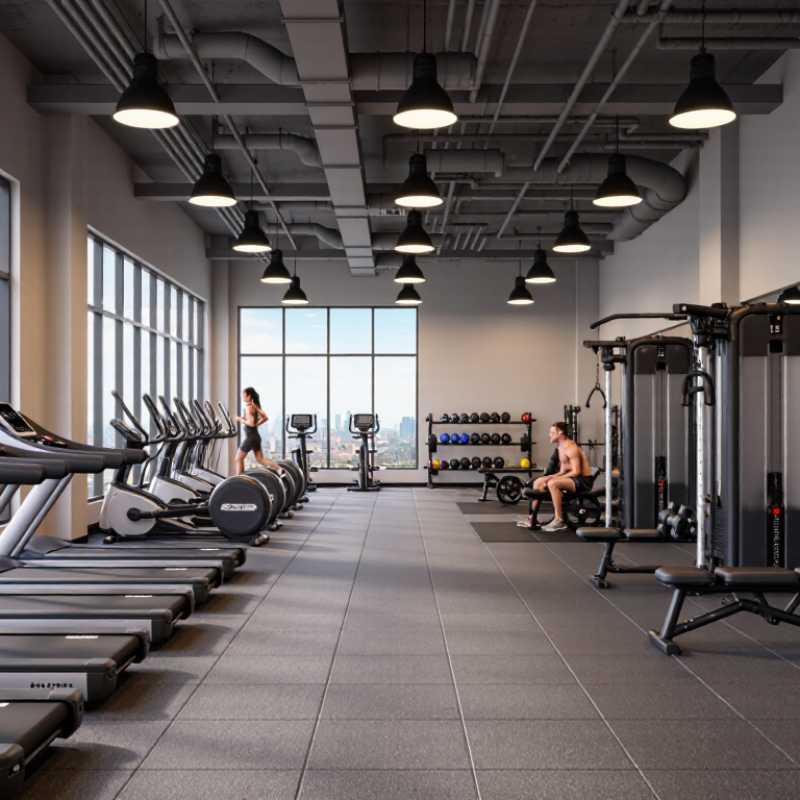
Top 10 Gym Equipment Suppliers for Global Buyers

What Makes a Gym Equipment Supplier Suitable for Global Buyers

A suitable gym equipment supplier understands that global buyers need more than competitive prices. Products must survive different climates, training habits, voltage systems, and import rules. Clear specifications should cover materials, dimensions, maximum user weight, motor power, noise levels, and safety testing. A supplier should also provide manuals in usable English and accurate product photos. Small omissions can create expensive delays.

Export experience matters. Ask for shipment records, carton dimensions, loading plans, and realistic lead times.

According to the Deloitte and EuropeActive 2024 European Health & Fitness Market Report, European fitness memberships reached 71.6 million in 2023. This expanding market increases demand for dependable equipment and responsive after-sales service. Suitable suppliers should maintain spare parts, remote troubleshooting, warranty procedures, and repair guidance. International buyers should also check compliance with relevant ISO, electrical, and product-safety requirements. Certificates alone are not enough. Their scope and testing dates deserve careful review.

Tips: Request a sample unit before placing a large order. Test its frame stability, cable movement, display accuracy, and packaging. Ask for a video of factory quality checks, not only showroom footage. Compare the promised delivery time with actual shipping records. No supplier gets every market right; even experienced exporters may misunderstand local preferences or service capacity. That weakness should be discussed early, documented clearly, and measured with practical remedies.

How the Top 10 Gym Equipment Suppliers Were Selected

Selecting the top 10 gym equipment suppliers requires more than comparing product catalogs. We examined manufacturing experience, quality systems, export history, and after-sales support. Suppliers with clear factory information earned greater trust. We also checked whether product specifications matched testing documents and user feedback. Practical details mattered, including frame strength, weight accuracy, coating durability, spare-part access, and delivery consistency.

Price was never the only measure. A low quotation may hide weak packaging, uncertain warranties, or expensive replacement parts. We considered communication speed and technical support, especially for global buyers managing different standards. Suppliers offering installation guidance and maintenance instructions showed stronger professional capability. Still, no ranking is perfect. Public information can be incomplete, and customer reviews may reflect unusual experiences. That limitation deserves honest attention.

Tips: Request recent test reports, sample photos, warranty terms, and packing details before placing a large order. Ask how damaged parts are replaced and how quickly support responds. Compare total ownership costs, not just the unit price. A short video call with the factory team can reveal useful details, such as inspection routines and storage conditions. We also recommend checking compliance requirements in the destination market. A supplier may perform well in one region but need adjustments elsewhere. Small verification steps often prevent costly surprises.

Product Categories and Market Strengths of the Top Suppliers

Global buyers often compare the top ten gym equipment suppliers by product categories, not catalog size alone. Strong suppliers usually cover strength, cardio, functional training, and recovery equipment. Their ranges include power racks, cable machines, treadmills, bikes, rowers, sleds, benches, and rubber flooring. Some focus on heavy-duty systems for hotels and commercial clubs. Others compete with compact home gyms and space-saving storage. Product fit comes first.

Market strength also depends on manufacturing control, export experience, and after-sales support. Reliable suppliers provide load ratings, material details, warranty terms, spare-part lists, and installation guidance. Ask about steel thickness, coating tests, motor specifications, and operating noise. A capable supplier explains lead times clearly. Regional warehouses may shorten delivery, while local service partners can reduce downtime. Connected consoles attract modern buyers, but software support needs equal attention. I have seen impressive displays become costly obstacles after a firmware problem. That weakness is easy to miss. Buyers should request samples, inspect packaging, and define acceptance standards before ordering. Price still matters. However, the cheapest quotation may indicate thinner frames, fewer replacement parts, or limited installer training. Even experienced buyers can overlook cables, upholstery, and small hardware. Careful comparison often reveals the real market strength.

Top Gym Equipment Supplier Market Strengths by Product Category

Estimated global demand distribution by major equipment category, based on publicly reported fitness-equipment market segmentation patterns.

Cardiovascular and strength-training equipment represent the largest purchasing categories for international fitness facilities, while functional training and accessories support the growing demand for flexible, space-efficient gym formats.

How to Compare Quality, Pricing, and Customization Options

When comparing the top 10 gym equipment suppliers, inspect quality beyond polished photos. Ask for material specifications, weld inspection records, load-test results, and safety certifications relevant to your market. Check frame thickness, cable ratings, bearing smoothness, and adjustment points. A machine should feel stable during repeated use, not only during a showroom demonstration. Request a production sample when possible. Do not guess.

Pricing needs a landed-cost calculation. Include the unit price, packaging, inland transport, shipping, duties, installation, and replacement parts. A low quotation can become expensive after freight and maintenance. Compare warranty periods and response times in writing. Ask how quickly the supplier can provide cables, pads, pins, and electronic components. I have seen buyers focus on discounts while ignoring spare-part availability. That mistake can delay a facility opening for weeks.

Customization may include frame color, upholstery, dimensions, language labels, digital displays, and carton design. Confirm which changes require new tooling or higher minimum order quantities. Request drawings before approving production. Small details matter, such as bolt spacing and cable routing. Suppliers should explain testing procedures and provide clear documentation. Communication quality is also evidence of reliability. If answers remain vague, treat that as a risk. Some buyers over-customize too early; standard components may offer better serviceability and shorter delivery times. Measure twice.

Shipping, Compliance, Warranty, and After-Sales Support Considerations

For the top 10 gym equipment suppliers, global buyers should rank logistics, compliance, warranty, and support equally. Shipping reliability often matters more than a low quotation. UNCTAD reports that over 80% of world trade by volume moves by sea, so port delays can affect installation schedules. The World Bank’s 2023 Logistics Performance Index assessed 139 economies across customs, infrastructure, tracking, and delivery reliability. Ask suppliers for shipment history, packaging photos, insurance terms, and clear responsibility for damaged equipment.

Compliance requires more than a certificate attached to an email. Buyers should verify applicable electrical, electromagnetic, chemical, and machinery requirements in the destination market. Request test reports, declarations, user manuals, serial-number records, and factory quality procedures. The ISO Survey 2022 recorded 1,265,216 ISO 9001 certificates worldwide. Yet certification alone does not prove consistent product quality. A spreadsheet can still lie. Independent inspection before loading remains useful, especially for treadmills, power systems, and commercial lifting equipment.

Warranty language deserves close reading. Confirm coverage periods, labor costs, replacement-part availability, response times, and exclusions for commercial use. Require a documented service process, remote troubleshooting, and local technician options where possible. Spare parts should have defined lead times, not vague promises. Include escalation contacts and a written process for repeated failures. No checklist is perfect. Buyers should test support before purchase by sending technical questions and measuring the response. That small exercise often reveals more than a polished sales presentation.

Top 10 Gym Equipment Suppliers for Global Buyers - Shipping, Compliance, Warranty, and After-Sales Support Considerations

Rank Anonymous Supplier Profile Primary Production Region Typical Product Scope Export & Shipping Capability Common Compliance Documentation Typical Lead Time Warranty Structure After-Sales Support Buyer Due-Diligence Check
1 Supplier Profile 01 East Asia Commercial strength equipment, benches, racks, cable machines Full-container and consolidated cargo; export packing; FOB, CIF and DDP quotations commonly available CE where applicableEN 957 / EN ISO 20957RoHS / REACH declarations 35–60 days after approved drawings and deposit Frame: 5–10 years; structural parts: 2–5 years; wear parts: 6–12 months Remote troubleshooting, spare-parts lists, installation manuals and video support Confirm load testing, coating thickness, weld inspection and replacement-part availability
2 Supplier Profile 02 East Asia Cardio equipment, including treadmills, bikes, rowers and ellipticals Experience with battery, motor and electronic-component shipping; wooden-crate and export-carton options CE / EMC / LVD where applicableRoHSUser manuals and test reports 45–75 days; spare electronic parts normally dispatched separately Frame: 3–5 years; motor and controller: 1–3 years; consumables: excluded or limited Fault-code diagnosis, wiring diagrams, software guidance and technician training materials Verify voltage, plug type, regional radio requirements and local service coverage
3 Supplier Profile 03 South Asia Free weights, kettlebells, bumper plates, dumbbells and storage systems High-density container loading; palletized export shipments; suitable for mixed-SKU orders Material declarationsREACH / RoHS statementsPackaging test records 30–55 days, depending on coating and customization Metal structure: 2–5 years; rubber or urethane surfaces: 6–24 months, subject to use conditions Replacement handles, end caps and plates; photo-based claim review Request hardness, dimensional tolerance, odor testing and drop/impact test evidence
4 Supplier Profile 04 Europe Premium selectorized machines, functional training systems and rehabilitation equipment Regional distribution warehouses; pallet delivery; shorter delivery times within nearby markets CE marking where applicableEN ISO 20957ISO 9001 process certification 20–50 days for standard items; 8–16 weeks for configured systems Frame: 5–10 years; mechanical assemblies: 2–5 years; upholstery: commonly 6–12 months Service manuals, parts portals, scheduled maintenance guidance and regional technicians Check whether warranty labor, travel, freight and on-site installation are included
5 Supplier Profile 05 North America Heavy-duty racks, rigs, platforms, benches and strength accessories Domestic distribution plus international freight forwarding; LTL, FCL and project delivery options ASTM-related test methods where relevantMaterial certificatesLoad-rating documentation 15–45 days for stock items; 6–12 weeks for custom configurations Frame: limited lifetime or 5–10 years; moving parts and upholstery: 1–3 years Assembly drawings, hardware kits, telephone or email support and replacement components Confirm imperial/metric hardware, floor anchoring requirements and site installation scope
6 Supplier Profile 06 East Asia Home and light-commercial equipment, adjustable benches and compact cable systems Small-batch export orders; courier samples; LCL and FCL shipments; private-label packaging available CE where applicableEN 957 / EN ISO 20957 referencesRoHS declarations 25–50 days; sample orders commonly require 7–20 days before production Frame: 2–5 years; mechanisms: 1–2 years; cosmetic parts: 6–12 months Assembly videos, digital manuals, replacement hardware and online claim processing Test hinges, cables, pulleys and adjustment locks under repeated-cycle conditions
7 Supplier Profile 07 Oceania Outdoor fitness stations, calisthenics structures and community-use equipment Project-based shipping; corrosion-protective packing; installation coordination often available AS/NZS requirements where applicableEN 16630 referencesStructural calculations 8–16 weeks, including engineering review and surface-finish selection Structural frame: 5–10 years; moving components: 1–3 years; finish: subject to environment Site plans, anchoring instructions, inspection schedules and replacement-part support Assess wind, UV, salt-air exposure, drainage, foundations and public-use risk controls
8 Supplier Profile 08 Eastern Europe Strength machines, racks, lifting platforms and gym flooring systems Road freight across nearby markets; export pallets; installation and site measurement options CE where applicableEN ISO 20957REACH declarations 30–70 days; flooring and project packages may require phased delivery Frame: 3–7 years; mechanical components: 1–3 years; flooring: product-specific Layout assistance, commissioning checklists, maintenance schedules and local-language support Confirm fire classification, slip resistance, VOC information and subfloor preparation needs
9 Supplier Profile 09 Latin America Commercial benches, plate-loaded equipment, racks and basic cardio products Regional truck delivery and container export; customs documentation support varies by destination Local electrical approvals where applicableMaterial declarationsLoad and safety manuals 30–90 days, depending on local stock and imported components Frame: 2–5 years; moving parts: 1–2 years; electronics: commonly 1 year Telephone support, service videos, spare hardware and authorized repair referrals Verify export experience, customs classification, voltage compatibility and parts lead time
10 Supplier Profile 10 Multi-region Contract Manufacturer Custom gym packages combining strength, cardio, flooring, lockers and accessories Multi-origin sourcing; consolidated container planning; installation and commissioning available by project SKU-specific CE documentationEN / ASTM test evidence where relevantFactory quality records 60–120 days for complete projects; individual stock items may ship earlier Component-specific warranty, commonly 1–5 years; structural coverage depends on the original manufacturer Single project contact, punch-list management, training and coordinated spare-parts ordering Require a written responsibility matrix identifying the warranty party for every SKU
Buyer note: The entries are anonymized supplier profiles and indicative market ranges, not company-specific claims. Compliance, lead time, warranty coverage and after-sales obligations must be verified for the exact model, destination country, quotation and purchase contract.

Article Source:

We use Cookies and Google Analytics. We store no personal details. Learn more about our privacy policy.