
Gray Suit Fabric is not a single material or a universal buying choice. It can mean fine worsted wool, durable wool blends, breathable linen, soft flannel, or practical recycled fibers. Each option changes the suit’s weight, texture, drape, price, and performance across different climates.
Menswear author Alan Flusser has said, “The fabric is the soul of the suit.” That principle remains useful for global buyers. A charcoal twill may suit formal offices in London, while a lightweight gray wool-linen blend may perform better in Singapore. A buyer examining fabric under bright showroom lighting should also check it in natural daylight. Gray can appear colder, warmer, lighter, or deeper than expected.
The right choice depends on more than appearance.
This guide examines ten leading Gray Suit Fabric types for international sourcing teams, wholesalers, uniform suppliers, and private-label brands. It compares fiber content, weave structure, fabric weight, wrinkle resistance, breathability, finishing quality, and seasonal suitability. Practical details matter. A tightly woven worsted fabric may resist surface wear, while brushed flannel offers warmth but can attract lint. Polyester blends may reduce costs, yet they can feel less breathable against the skin.
No fabric is perfect. That is worth remembering.
Supplier claims also require verification. Buyers should request composition reports, fabric samples, colorfastness data, shrinkage information, and production references before placing large orders. Mill reputation helps, but it does not replace inspection. This overview aims to support informed decisions, while recognizing that local weather, customer expectations, certification requirements, and budget limitations can change the final recommendation.
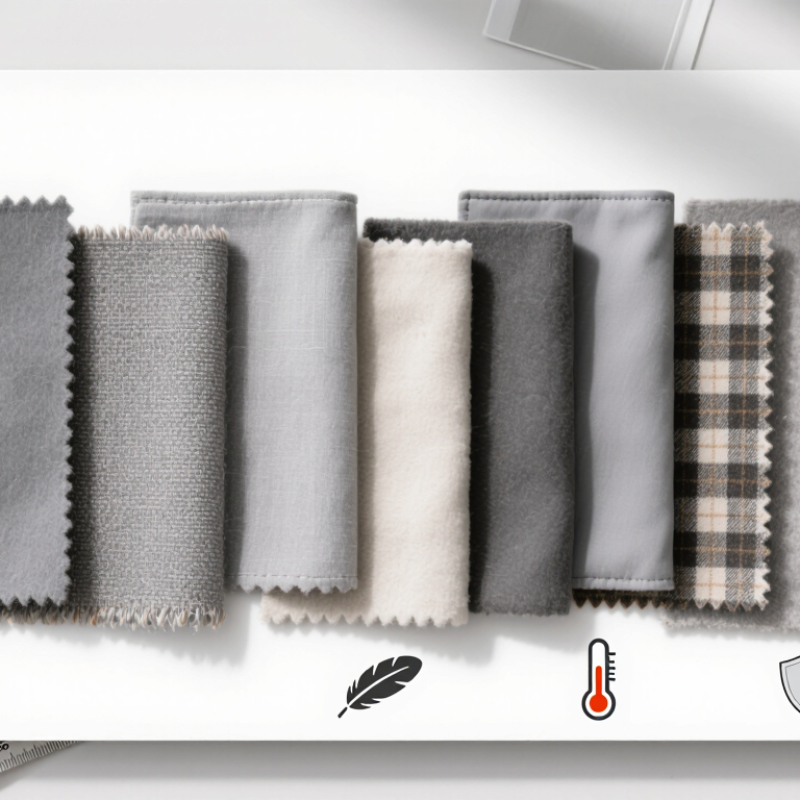
Global buyers should classify gray suit fabric by fiber content, yarn, and fabric structure. Fiber influences comfort, recovery, price, and care requirements. Construction controls drape, durability, breathability, and surface texture. A useful purchasing sample should show the selvage, weight, weave, and test results. Here are ten practical types: pure wool worsted, wool flannel, wool gabardine, wool serge, wool-silk, wool-cashmere, wool-polyester, wool-viscose, cotton twill, and linen-wool blend.
Pure wool worsted uses tightly combed yarns and a smooth twill or plain weave. It suits clean office tailoring and resists moderate creasing. Flannel uses brushed wool, giving gray shades a softer, warmer appearance. Gabardine has a steep twill and firm hand, while serge shows a clearer diagonal surface. Wool-silk adds subtle luster, but it may show abrasion sooner. Wool-cashmere feels luxurious, yet requires careful handling and tighter quality control. Request GSM, fiber percentages, yarn count, Martindale results, colorfastness, and shrinkage data. Check several rolls, not one.
Blended fabrics can improve consistency and cost. Wool-polyester usually offers stronger recovery and easier maintenance. Wool-viscose may feel fluid, but wet abrasion needs checking. Cotton twill is practical and breathable, although it wrinkles more. Linen-wool balances summer ventilation with better shape retention. Construction still changes performance: half-canvas tailoring moves differently from fused tailoring, even with identical fabric. Gray is not one color. Charcoal, silver, and heather gray can differ under warehouse lighting. Ask for daylight approvals and lot continuity. No type wins every climate or market. Fiber labels are only a starting point, not proof of performance. Real wear tests often expose assumptions.
Gray suit fabrics must match climate, price, and workplace habits. For temperate European markets, worsted wool remains a dependable choice, offering clean drape and strong recovery. Tropical wool suits warmer offices, while flannel provides softness for colder cities. Wool-mohair adds ventilation and a sharper surface. Wool-silk gives a subtle sheen for formal events, but it needs careful handling.
In East Asian markets, lightweight wool blends often suit humid commutes and air-conditioned offices. Linen-wool works well in Mediterranean regions, although wrinkles can challenge conservative buyers. Cotton twill offers a relaxed option for North American business-casual settings.
Stretch wool improves movement, especially for long travel days. It can, however, lose shape when overloaded with elastane. Polyester-viscose remains popular in value-driven markets because it controls cost and resists creasing. Recycled polyester blends may support sustainability targets, but buyers should request traceability evidence.
The Textile Exchange Materials Market Report 2024 states that polyester represented about 57% of global fiber production in 2023. This helps explain its commercial reach, though fiber volume does not equal premium quality. The International Wool Textile Organisation continues to report wool as a smaller, performance-focused fiber market, valued for breathability and temperature regulation. My practical concern is simple: gray shades reveal shine, pilling, and poor pressing quickly. Fabric testing should include abrasion, colorfastness, recovery, and seam performance before bulk purchasing.
Top 10 Gray Suit Fabric Types for Global Buyers
Gray suit performance changes sharply with fiber, yarn, and weave. Worsted wool offers smoothness, resilience, and reliable crease recovery. Flannel wool feels warmer and softer, but its brushed surface can pill. Tropical wool uses lighter yarns and open weaving for hot climates. Wool-mohair adds strength, sharper drape, and a subtle dry texture. Wool-silk feels luxurious and reflects light beautifully, yet it needs gentler care. Wool-cashmere brings exceptional softness and insulation, but abrasion remains a concern.
Polyester-wool blends improve durability, color stability, and price control. Polyester-viscose fabrics resist wrinkles and perform well in high-volume uniforms. Linen-wool blends improve breathability while reducing linen’s severe creasing. Cotton twill feels natural and robust, although it usually holds a less formal shape. Recycled polyester can support lower virgin-material demand, but quality depends on yarn processing and finishing.
The Textile Exchange Materials Market Report 2024 estimates global fiber production reached 124 million tonnes in 2023. Polyester represented about 57% of total output. That scale explains its supply advantages, not automatic superiority. Buyers should request abrasion, pilling, colorfastness, and tensile-strength results. ISO 12947 Martindale testing helps compare surface wear, but laboratory results cannot fully predict office use. A practical trial should include sitting, commuting, pressing, and repeated cleaning. No fabric wins every test. A lighter gray may expose shine and staining faster than charcoal, even when construction remains identical.
Choosing gray suit fabric starts with climate, not color. In humid tropical cities, tropical wool, linen, cotton, and wool-mohair blends release heat better. Tropical wool resists wrinkles and keeps a clean office shape. Linen feels cooler, but its creases are part of the bargain. Cotton works for relaxed tailoring, although it can lose structure after long sitting. A wool-mohair blend feels crisp and dries relatively quickly. I have found lightweight cloth more comfortable during crowded commutes.
For temperate weather, flannel, worsted wool, tweed, and wool-silk blends offer different levels of warmth. Worsted wool suits formal meetings and frequent travel because its smooth surface recovers well. Flannel adds softness and insulation for cool offices. Tweed handles wind and outdoor wear, but may feel heavy indoors. Wool-silk gives subtle sheen for evening events, yet it needs careful pressing. In dry, hot regions, linen-wool blends can balance airflow and shape. It is a compromise. Not every choice works.
Cold climates call for heavier flannel, tweed, brushed wool, or dense wool-cashmere cloth. Choose a dense weave for wind, and a breathable lining for heated rooms. For daily commuting, midweight worsted wool is usually the safest choice. Refined wool-silk can look sharper at evening functions and weddings. Frequent travelers should avoid delicate fibers and inspect seam recovery. Fabric weight alone can mislead. A heavy suit may still feel sweaty without ventilation. Buyers should request GSM, weave details, shrinkage data, and care instructions before ordering. My own judgment can change after a full day of wear.
| Rank | Gray Fabric Type | Typical Fiber Composition | Typical Weight | Breathability | Wrinkle Resistance | Best Climate | Recommended Use | Key Advantages | Important Considerations |
|---|---|---|---|---|---|---|---|---|---|
| 1 | Super 100s–120s Worsted Wool | 100% merino wool | 240–280 g/m² | High | High | Temperate and four-season regions | Business suits, interviews, conferences, daily office wear | Versatile, smooth, durable, naturally odor-resistant, and suitable for year-round tailoring | May feel warm in very humid or tropical conditions; requires professional care |
| 2 | Tropical Lightweight Wool | 100% lightweight worsted wool | 180–230 g/m² | Very high | Medium | Hot, warm, and moderately humid climates | Summer suits, business travel, warm-weather formalwear | Lightweight, comfortable, and more breathable than medium-weight wool | Can crease more easily and may show wear sooner than heavier wool |
| 3 | Wool–Mohair Blend | Typically 60–85% wool and 15–40% mohair | 220–300 g/m² | High | Very high | Warm climates and high-use travel wardrobes | Formal business suits, ceremonial wear, travel suits | Crisp drape, strong crease recovery, durability, and a subtle lustrous appearance | May feel slightly firm or less soft than pure merino wool |
| 4 | Wool–Linen Blend | Typically 50–70% wool and 30–50% linen | 220–280 g/m² | Very high | Low to medium | Hot and dry or warm coastal climates | Relaxed business suits, resort tailoring, daytime events | Combines wool structure with linen airflow and a naturally textured appearance | Natural creasing is part of the look; not ideal for highly formal crease-free requirements |
| 5 | Gray Flannel Wool | 100% wool, usually carded or softly finished | 300–400 g/m² | Medium | Medium to high | Cool, cold, and dry climates | Autumn and winter suits, trousers, smart-casual tailoring | Soft hand, excellent warmth, attractive heathered gray shades, and classic drape | Too warm for tropical climates; surface may develop shine or pilling with friction |
| 6 | Wool–Silk Blend | Typically 70–90% wool and 10–30% silk | 220–280 g/m² | High | Medium | Mild, temperate, and indoor-controlled climates | Evening suits, premium occasionwear, luxury business tailoring | Smooth hand, elegant sheen, good drape, and refined visual depth in gray | More sensitive to abrasion, moisture, and high heat than standard worsted wool |
| 7 | Gray Cotton Twill | 100% cotton | 240–330 g/m² | High | Low to medium | Warm and dry or moderately humid climates | Casual suits, separates, commuting, creative-office wear | Comfortable, washable in some constructions, durable, and naturally casual | Wrinkles more readily and generally looks less formal than wool |
| 8 | Linen Suiting | 100% linen | 190–280 g/m² | Excellent | Low | Hot and humid or hot and dry climates | Summer events, resort suits, destination weddings, relaxed tailoring | Exceptional airflow, quick moisture absorption, and a distinctive natural texture | Creases quickly and may require frequent pressing; less suitable for conservative offices |
| 9 | Wool–Cashmere Blend | Typically 90–97% wool and 3–10% cashmere | 280–360 g/m² | Medium | Medium | Cool and cold climates | Winter suits, formal outer tailoring, premium occasionwear | Soft hand, warmth, luxurious texture, and a fuller drape | More vulnerable to abrasion, pilling, and incorrect heat or moisture treatment |
| 10 | Wool–Polyester Performance Blend | Typically 45–70% wool and 30–55% polyester | 220–300 g/m² | Medium | High to very high | Variable climates, frequent travel, and long workdays | Uniforms, entry-level business suits, travel suits, high-volume professional wear | Resists creasing, dries relatively quickly, offers consistent sizing, and is cost-efficient | Less breathable and less naturally comfortable than high-wool fabrics; may retain heat and odor |
Note: Fabric weight, performance, and care requirements vary with yarn count, weave, finishing, lining, and construction. The ranges shown are typical suiting specifications rather than fixed standards.
Selecting gray suit fabric requires more than judging color under showroom lights. Compare worsted wool, flannel, tweed, tropical wool, wool-mohair, wool-silk, cotton, linen, recycled polyester, and cellulosic blends against the buyer’s climate and use case. Textile Exchange’s 2024 Materials Market Report recorded about 124 million tonnes of global fiber production in 2023. Polyester represented roughly 57%, while wool remained below 1%. This gap affects price, availability, and supplier capacity.
Ask for fiber composition, fabric weight, weave, and finishing details. A 240–280 gsm tropical wool suits warmer offices, while 300–360 gsm flannel offers visible texture for colder regions. Check colorfastness, shrinkage, pilling, and abrasion results using recognized ISO test methods. Request production-lot samples, not only laboratory swatches. Gray can shift toward green under retail lighting. It happens.
Sourcing teams should also verify recycled-content claims through credible chain-of-custody records. The Textile Exchange report highlights continued growth in recycled polyester, but recycled content alone does not prove durability or responsible production. Inspect seam recovery after pressing, crease behavior after eight hours, and shade consistency across rolls. IWTO market information consistently places wool production at less than 1% of global fiber volume, so premium wool capacity may require earlier booking. My practical mistake was trusting a soft hand feel too quickly; softness can hide weak recovery, loose construction, or excessive finishing. Ask for independent test evidence. Do not assume every certificate covers the entire supply chain.