

What Are China Top Fitness Spin Bike Suppliers?

China’s Fitness Spin Bike supply chain has become a practical choice for brands seeking scalable production, private labeling, and connected training features. The Global Health & Fitness Association reported that the worldwide fitness industry generated approximately $96.7 billion in revenue in 2023. It also counted nearly 184 million members globally. These figures suggest strong demand, but they do not make every supplier reliable.

A serious comparison must examine factory experience, resistance systems, frame stability, noise control, app compatibility, and after-sales support. Product samples matter. A polished catalog can hide a weak flywheel, uneven welding, or fragile pedal threads. Small details become obvious when a rider trains daily.

Dr. Cedric X. Bryant, President and Chief Science Officer of the American Council on Exercise, has said, “The best exercise is the one you will do consistently.” That principle also guides supplier evaluation. A Fitness Spin Bike should feel stable during repeated sessions, not merely look impressive in photographs. Industry research from ACSM continues to show strong consumer interest in technology-supported exercise and home fitness trends. However, market reports often combine different equipment categories. Their forecasts require careful interpretation.

This guide examines China’s leading Fitness Spin Bike suppliers through manufacturing capability, certification readiness, customization depth, quality control, and communication performance. “Top” is not always the cheapest. Sometimes, the best supplier is the one that admits a limitation early. That can prevent expensive surprises later.
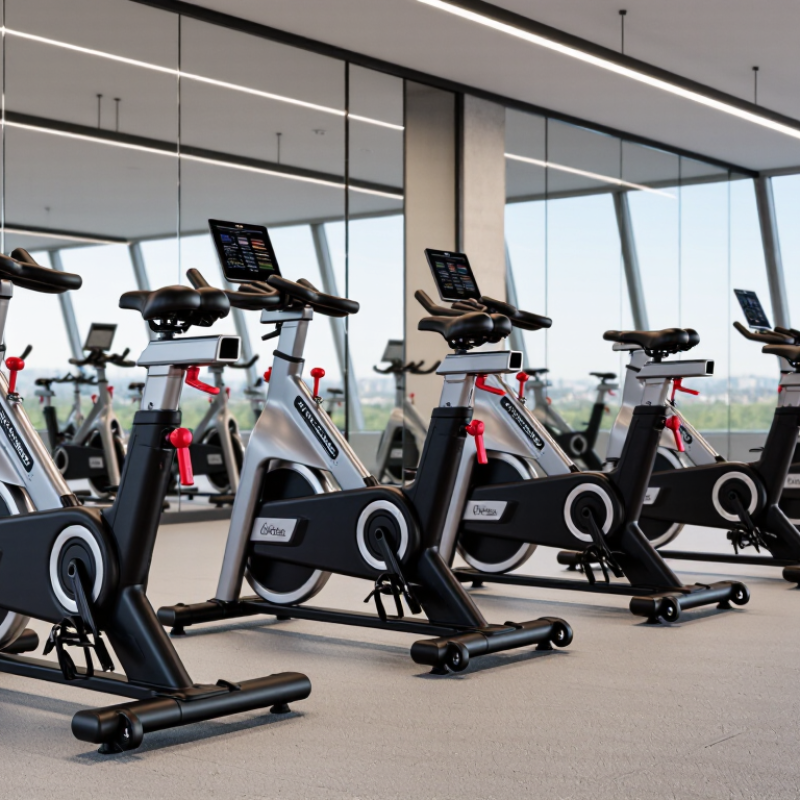
What Are China Top Fitness Spin Bike Suppliers?

What Defines a Leading Fitness Spin Bike Supplier in China?

A leading fitness spin bike supplier in China is defined by more than production capacity. It combines engineering experience, stable manufacturing, and clear communication. During factory evaluations, buyers should inspect frame welds, crank alignment, flywheel balance, and adjustment smoothness. A reliable supplier can explain these details without vague promises.

Quality control should continue beyond final assembly. The supplier should use documented inspections for resistance systems, pedals, bearings, and electronic displays. Practical testing matters. Sample bikes should complete repeated riding cycles, load checks, and transport simulations. Packaging also deserves attention, because damaged parts can reveal weak design or careless handling. Certifications, traceable materials, and consistent inspection records strengthen supplier credibility.

After-sales support often separates a capable supplier from an average one. Clear spare-parts lists, repair guidance, warranty terms, and response times should be agreed upon before production. Good suppliers provide drawings and maintenance instructions for distributors and service teams. However, no supplier is flawless. A factory may have excellent welding but weaker software support. Another may offer attractive pricing but limited customization experience. Buyers should identify these gaps through samples, audits, and direct technical questions. Trust grows from evidence, not polished presentations.

Key Manufacturing Regions and Supplier Categories

China’s main spin bike manufacturing activity is concentrated in Zhejiang, Jiangsu, Guangdong, and Fujian. Zhejiang is known for metalworking and mature fitness-equipment supply chains. Jiangsu often supports precision machining, frame production, and assembly. Guangdong offers strong electronics, motor, and export-logistics capabilities. Fujian has growing capacity for home-fitness equipment and private-label production.

Regional strengths overlap, so a factory location alone cannot prove quality.

Supplier categories matter just as much. Original equipment manufacturers can build bikes to a buyer’s specifications, including flywheel weight, resistance systems, displays, and packaging. Original design manufacturers may offer ready-developed models with adjustable features and limited customization.

Specialized component factories produce pedals, cranks, consoles, or welded frames. Trading companies can combine several sources, but their technical control may be less transparent.

Ask for factory audits, material reports, load-test records, and sample consistency. Test the bike yourself. A quiet ride can hide weak bearings.

Tips: Compare two samples from the same specification. Check weld smoothness, seat-post movement, resistance accuracy, and carton protection. Request current certifications and verify their scope independently. Do not rely only on polished showroom photos.

A supplier may sound experienced yet outsource critical parts. That is where careful questions matter.

I would also review spare-part response times, because a small pedal failure can stop a complete shipment. No process is perfect. Leave room for inspection.

How to Evaluate China’s Spin Bike Manufacturers

What Are China Top Fitness Spin Bike Suppliers?

How to Evaluate China’s Spin Bike Manufacturers

A reliable supplier should prove how each spin bike is made, not only display polished photos. Ask for factory videos, production records, and a recent quality inspection report. Check whether the facility controls welding, painting, assembly, and final testing internally. A clean showroom means little if the assembly area looks rushed. That judgment can be uncomfortable, but details matter.

Request a complete specification sheet before comparing prices. Review frame steel, flywheel weight, belt or chain drive, resistance adjustment, crank design, and maximum user load. Test a sample for noise, wobbling, pedal smoothness, and seat stability. Measure the bike after one hour of continuous use. Small defects often appear after heat builds. I once underestimated packaging quality; a strong frame still arrived with scratched paint.

Professional suppliers should explain their quality system clearly. Ask about incoming material checks, batch testing, inspection standards, and corrective actions. Confirm whether products meet the safety requirements of your target market. Independent laboratory reports are more useful than vague claims. Check carton strength, foam protection, spare parts, and written warranty terms. Communication also reveals operational maturity. Slow replies, changing specifications, or unclear production dates deserve careful attention.

Evaluate minimum order quantities, sample fees, tooling costs, and replacement procedures together. A low unit price may become expensive through delays, damaged units, or weak after-sales support. Visit the factory when possible, or hire an independent auditor. Even experienced buyers can miss hidden risks during a short video call.

How to Evaluate China’s Spin Bike Manufacturers

Recommended evaluation weight by procurement criterion for commercial and home-use spin bikes

The evaluation framework prioritizes product quality, safety compliance, production capability, customization, total cost, and after-sales support. Buyers should verify certifications, factory capacity, sample performance, quality-control records, and warranty terms before selecting a supplier.

Product Quality, Certifications, and Customization Options

What Are China Top Fitness Spin Bike Suppliers?

Reliable Chinese spin bike suppliers are judged by repeatable product quality, not attractive catalogs alone. Inspect the frame welds, crank arms, flywheel balance, and resistance adjustment. A stable bike should remain quiet during high-cadence testing. Ask for load-test records and carton drop-test results. Small details matter.

Certifications need careful checking. ISO 9001 can indicate a structured quality system, but it does not certify every bike. For European distribution, request valid CE documentation and test reports for relevant electrical parts. RoHS records may apply to displays, sensors, and control boards. Confirm the certificate holder, model number, testing scope, and issuing laboratory. A logo on a brochure proves little. This is often overlooked.

Customization should be practical, not merely cosmetic. Suppliers may offer frame colors, upholstery materials, pedal types, flywheel weights, console languages, and packaging designs. They can also adjust resistance systems or add heart-rate connectivity. Request a working prototype before approving mass production. Check the actual sample against drawings, especially seat travel and handlebar reach. A sample can still mislead. Production consistency deserves separate inspection. Clear specifications, pre-shipment checks, and spare-part support reduce problems after delivery. Some suppliers promise flexible customization, then resist small revisions. That gap needs written confirmation.

Sourcing, Pricing, and Export Considerations for Buyers

What Are China Top Fitness Spin Bike Suppliers?

Sourcing, Pricing, and Export Considerations for Buyers

China’s leading spin bike suppliers usually combine stable production, responsive engineering, and export experience. Buyers should inspect factory capacity, material controls, and after-sales procedures before comparing prices. Request recent product photos, inspection records, and a working sample. A sample often reveals more than a polished catalog. Check the frame welds, resistance adjustment, flywheel balance, pedal threads, and console accuracy. Small defects can become expensive claims.

Typical export pricing may range from 120 to 350 US dollars per unit on an EXW basis. The final figure depends on frame steel, drive systems, display functions, packaging, and order volume. Ask for separate costs for tooling, color changes, spare parts, and testing. A low quotation may exclude packaging upgrades or replacement components. That matters.

Export planning needs equal attention. Confirm the applicable HS classification, commercial invoice, packing list, country-of-origin details, and destination-market requirements. Discuss FOB, CIF, or DDP terms carefully, because responsibility changes with each option. Suppliers should explain lead times, loading ports, carton dimensions, and container capacity. Third-party pre-shipment inspection can verify quantity and workmanship. However, paperwork alone cannot prove long-term durability. A spreadsheet can still mislead. Buyers should test several units, review complaint handling, and keep written quality standards before placing a larger order.

We use Cookies and Google Analytics. We store no personal details. Learn more about our privacy policy.