7 Best Kitesurfing Disciplines for Beginners?

Kitesurfing disciplines can look confusing when every rider seems to chase a different goal. One person glides across flat water, while another jumps above rolling waves. For beginners, choosing the right discipline can shape the entire learning experience.

This guide explores seven accessible paths, including freeride, freestyle, wave riding, foil, racing, big-air, and light-wind riding. Each discipline demands different equipment, water conditions, and technical skills. Freeride usually offers the gentlest introduction, with steady cruising and simple direction changes. Freestyle requires stronger kite control and precise board handling. Wave riding adds ocean awareness, timing, and respect for changing currents. Foiling feels almost silent, but its narrow board can punish rushed movements.

Safety remains more important than style. A certified instructor can assess local wind patterns, launch areas, and your current ability. Beginners should practice in open water with suitable protection, not copy advanced tricks from short videos. Small details matter, such as checking line wear, testing the quick-release system, and watching clouds over the beach.

Some categories overlap. That is worth admitting. A rider may begin with freeride, discover a passion for waves, and later combine both approaches. Your first choice does not define your future. The best discipline is the one that matches your confidence, conditions, and learning pace. Expect mistakes. They often reveal what needs attention. With patient instruction and consistent practice, these seven disciplines become clearer, safer, and far more enjoyable.
7 Best Kitesurfing Disciplines for Beginners?

Kitesurfing Disciplines: Definition, Equipment, and Skill Requirements

Kitesurfing disciplines differ in purpose, equipment, and risk. Freeride is the most suitable entry point, using a versatile inflatable kite, twin-tip board, helmet, and impact vest. Beginners practise launching, relaunching, edging, and controlled stops. Freestyle adds unhooked tricks and powerful rotations. It demands stronger kite control, timing, and reliable landings. Big air uses larger jumps and firm wind management. It looks exciting, but it is not beginner-friendly.

Wave riding combines a smaller directional board with surf-style turns and a kite designed for quick steering. Riders need ocean awareness, board skills, and safe positioning near breaking waves. Foiling uses a hydrofoil board that lifts above the water, reducing drag and extending light-wind sessions. However, the exposed foil requires careful falling techniques. Race kitesurfing focuses on speed, course strategy, and precise upwind angles. It needs advanced tuning and sustained physical effort.

Snowkiting replaces the board with skis or a snowboard and requires cold-weather preparation, terrain reading, and avalanche awareness. The Global Kitesports Association’s 2023 competition calendar shows how widely these disciplines have developed, from freestyle to racing. The Outdoor Industry Association’s 2023 report recorded 175.8 million U.S. outdoor participants, but that broad figure does not prove beginner readiness. My practical view is less glamorous: most new riders progress faster with freeride before trying waves, foils, or jumps. I once underestimated wind shifts near shore. That mistake still shapes my equipment checks. Skill grows slowly. Safety deserves more patience.

The Seven Most Suitable Kitesurfing Disciplines for Beginners

The seven most suitable kitesurfing disciplines for beginners are freeride cruising, twintip edging, light-wind cruising, downwind touring, wave riding, beginner foiling, and controlled freestyle. Freeride builds balance and kite control on calm water. Twintip edging teaches stopping, turning, and staying upwind. Light-wind cruising encourages patience and smoother steering. The Outdoor Foundation’s 2023 Outdoor Participation Trends Report counted 175.8 million American outdoor participants in 2022. That figure shows strong demand for accessible instruction, although it does not measure kitesurfing alone.

Downwind touring can suit beginners after supervised practice. Keep the route short. Wave riding should begin with small, broken waves and a qualified coach nearby. Beginner foiling needs deeper water, slower decisions, and extra distance from others. It feels unstable at first. Controlled freestyle means basic surface movements, not high jumps. The Global Kitesports Association’s 2023 competition review separates freestyle, wave, and big air formats. These categories reflect different skills, risks, and equipment choices.

My own preference is a gradual path: freeride, twintip edging, light-wind cruising, then downwind touring. I would not call foiling easy. That assumption can create poor decisions. Weather records matter more than confidence. Beginners should check wind strength, tide, launch space, and local instruction standards before every session. Progress can look slow. That is often safer.

7 Best Kitesurfing Disciplines for Beginners? - The Seven Most Suitable Kitesurfing Disciplines for Beginners

Rank Discipline Beginner Suitability Typical Equipment Best Conditions Main Skills Developed Important Consideration
1 Freeride Kitesurfing Excellent for beginners Twin-tip board, stable inflatable kite, standard control bar Flat to moderate water with steady, moderate wind Kite control, body dragging, water starts, edging and basic turns The safest and most practical starting point is a qualified lesson in an open area.
2 Twin-tip Cruising Excellent after basic water starts Twin-tip board with comfortable foot straps and a predictable kite Shallow or deep water with manageable chop Upwind riding, speed control, stance, stopping and controlled transitions A twin-tip can be ridden in either direction, which makes early practice easier.
3 Light-Wind Kitesurfing Suitable with guidance and appropriate equipment Larger kite, larger twin-tip or a board with additional low-wind volume Consistent lighter wind without strong gusts or offshore flow Efficient kite flying, board trim, power management and maintaining momentum Large equipment can generate substantial power; equipment size must match rider weight and wind.
4 Flat-Water Kitesurfing Excellent for early progression Twin-tip board and a stable kite suited to the current wind Protected lagoons, shallow bays or smooth-water beaches with safe access Board recovery, edge control, upwind technique and basic transitions Shallow water helps with board recovery, but riders should avoid obstacles and never rely on standing depth for safety.
5 Beginner Wave Riding Suitable only after reliable basic riding Twin-tip or larger directional board, depending on the rider and wave conditions Small, orderly waves with side-onshore wind and an easy exit Reading waves, timing, maintaining kite position and riding across moving water Waves add hazards such as currents and breaking water, so this is not recommended as a first lesson.
6 Strapless Flat-Water Riding Moderately suitable after twin-tip fundamentals Directional or surf-style board without fixed foot straps Smooth water, moderate wind and a clear area for frequent falls Balance, foot placement, board steering, gentle carving and kite timing The board is less stable during water starts, so riders should already be comfortable controlling power.
7 Foil Kitesurfing Best as a later beginner progression Foil board, hydrofoil and a suitable low-to-moderate-power kite Deep water with steady wind and ample space away from other users Balance, pitch control, weight distribution and efficient low-wind riding The foil has sharp edges and can accelerate quickly; formal instruction and prior board control are strongly recommended.

Safety note: Suitability depends on rider weight, swimming ability, wind strength, local hazards and previous board-sport experience. Beginners should learn with a qualified instructor, wear an approved impact vest and helmet, and check local launch rules and weather conditions before riding.

Wave Riding, Freeride, and Twin-Tip Kitesurfing Explained

7 Best Kitesurfing Disciplines for Beginners?
Wave Riding, Freeride, and Twin-Tip Kitesurfing Explained

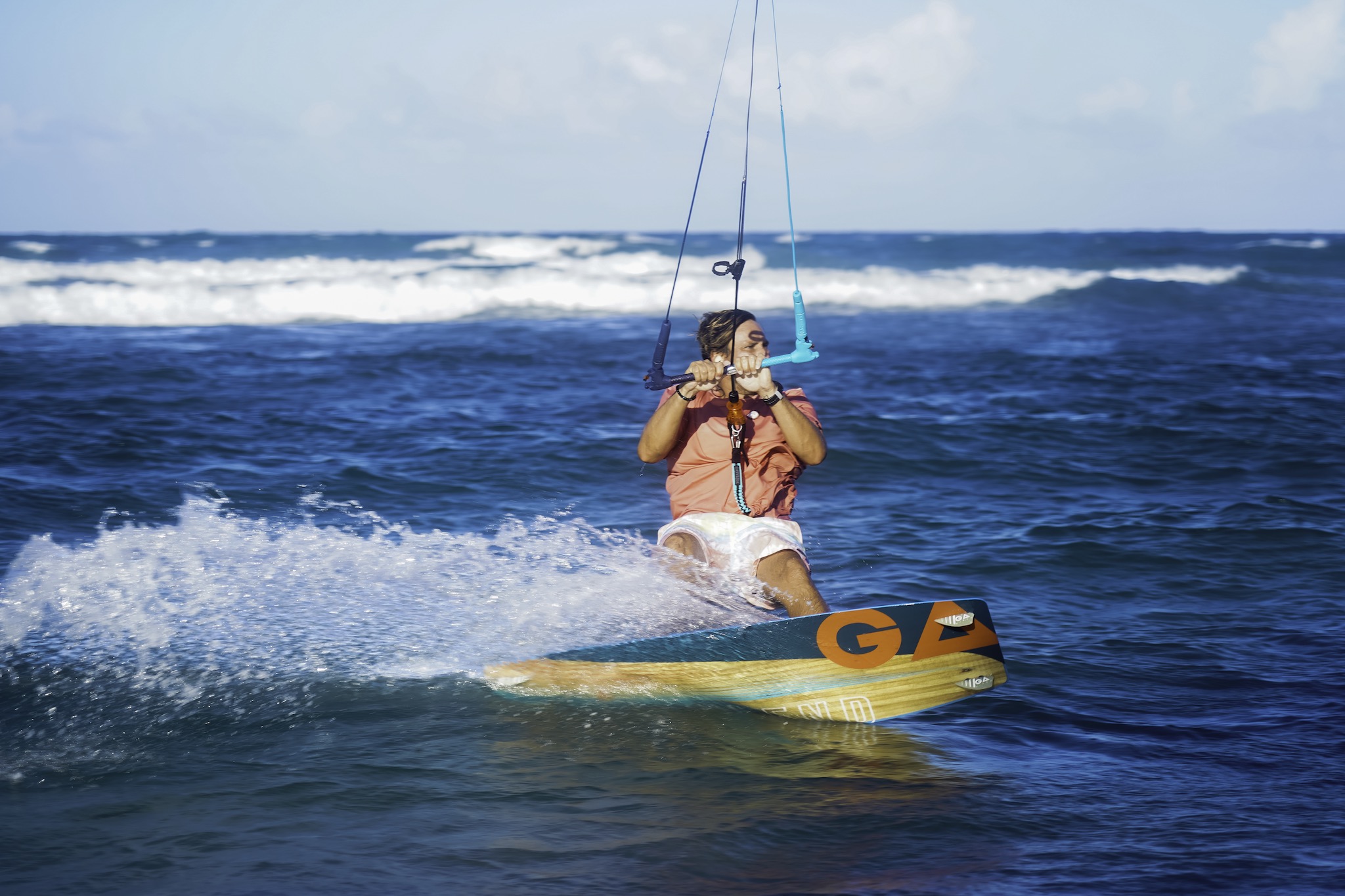
Freeride is usually the gentlest entry point. You practice steady board starts, controlled turns, and safe upwind travel in moderate wind. A twin-tip board feels stable under both feet and releases easily during falls. I recommend short lessons with an instructor before independent sessions. Small mistakes become tiring when the wind strengthens. Keep a wide launch area, check local rules, and never ride without suitable safety equipment.

Wave riding adds moving water and timing. Beginners can start by crossing small, broken waves rather than chasing powerful sections. Keep the kite predictable, soften your knees, and let the board follow the wave face. It looks simple from shore. It is not. I still sometimes focus too much on the wave and forget my kite position, which quickly ruins a turn.

Freestyle introduces jumps, spins, and powered tricks, so it belongs after reliable kite control. Foil riding offers light-wind efficiency but demands delicate balance and careful depth awareness. Racing rewards endurance, angles, and precise upwind technique. Big air requires advanced judgment, strong landings, and generous space. Downwind riding can feel adventurous, but beginners need organized support and a clear recovery plan. Twin-tip freeride remains the most practical foundation for exploring these disciplines.

Foil, Freestyle, Race, and Big-Air Kitesurfing Compared

For beginners, freeride is usually the most forgiving discipline. It combines steady cruising, simple turns, and small jumps. The Global Kitesports Association’s 2023 industry review reported that freeride equipment dominated recreational demand. That pattern makes sense on a school beach. Riders need predictable handling before chasing complex tricks.

Foil kitesurfing feels efficient and quiet, especially in lighter wind. However, the long mast punishes poor balance. Freestyle offers spins, handle passes, and powered board control, but it demands stronger edging and reliable kite recovery. Race kitesurfing rewards speed and tactics. It also requires reading wind shifts, water texture, and course angles. International sailing participation reports show growing interest in kite racing, yet racing remains a specialist pathway for most learners.

Big-air riding looks spectacular, though it is not an ideal first target. Height increases landing consequences, even when the jump seems controlled. Wave riding adds timing, surf awareness, and smaller equipment choices. Strapless riding improves board feel, but beginners may lose the board repeatedly. They will. My instructor experience suggests starting with freeride, then testing foil or waves in supervised conditions. I would not place freestyle or big-air first, despite their appeal. Beginner progress is rarely linear, and even experienced riders misread gusts. Always check local forecasts and follow certified instruction before changing disciplines.

How Beginners Can Choose and Progress Through Each Discipline

Choosing a kitesurfing discipline starts with local conditions, not ambition. Beginners should build a strong freeride base first, learning board control, edging, relaunching, and controlled body dragging. A qualified instructor can correct mistakes before they become habits. Practise in steady wind and shallow water when conditions allow. Small steps matter. Keep notes about wind strength, kite size, balance, and confidence after every session.

Freeride remains the safest foundation, while freestyle suits riders who enjoy flat water and technical tricks. Wave riding requires reliable direction changes, timing, and comfort near moving water. Foiling demands delicate pressure on the board and works well in lighter wind, but it can feel unstable initially. Race training focuses on starts, angles, and speed. Strapless riding develops precise foot pressure and board awareness. Big air should come later, after consistent jumps, safe landings, and strong height judgment. Choose one path that matches your coastline and motivation.

Progress is uneven. That is normal. Move to the next discipline only when you can repeat basic skills without panic. Use conservative equipment, check weather changes, and leave room for mistakes. I once underestimated how quickly fatigue affects steering decisions; stopping earlier would have been wiser. Ask an instructor to review your launches, landings, and emergency responses. A short video can reveal errors you cannot feel on the water. Skill grows through repeated, thoughtful sessions, not one impressive afternoon.

We use Cookies and Google Analytics. We store no personal details. Learn more about our privacy policy.