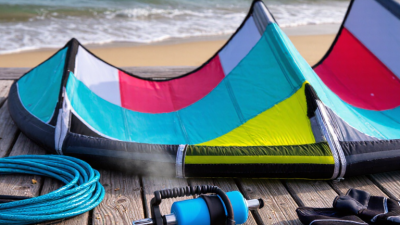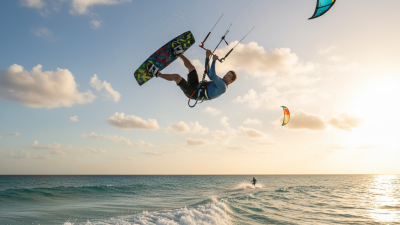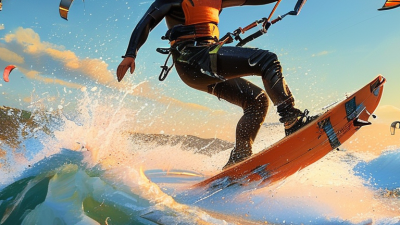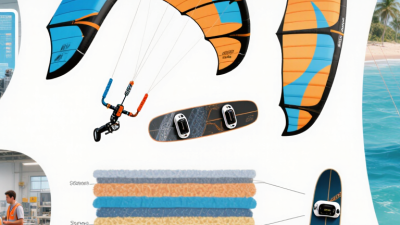
In 2026, Kiteboarding innovations are moving beyond louder colors and lighter marketing claims. Global buyers now examine safety, durability, repairability, and measurable riding performance. The Kitesurfing Equipment Global Market Report 2024, published by The Business Research Company, identifies equipment demand, online distribution, and adventure tourism as important growth drivers. However, market reports often group kitesurfing with broader watersports. Their numbers should be read carefully.
The Outdoor Foundation’s 2024 Outdoor Participation Trends Report also shows continued interest in outdoor recreation, although it does not isolate kiteboarding perfectly. That limitation matters. A global buyer needs more than a rising participation curve. They need a bar that releases cleanly, bridles that remain stable, and fabric that survives repeated saltwater sessions. Small details become expensive problems.
Robby Naish, a pioneer in board sports and kite design, has often expressed the sport’s central appeal simply: “The wind is free.” That idea still shapes innovation. Better depower systems, recycled materials, lighter inflatable frames, and clearer size guidance can make wind energy more accessible. Yet lighter is not always better, and “eco-friendly” labels deserve verification. This 2026 guide compares emerging kite designs through manufacturer specifications, independent testing, rider experience, and after-sales support. It also questions weak evidence, inconsistent market definitions, and promises that sound impressive beside a beach but fail during a long session.
Kiteboarding innovation now means measurable improvement, not louder marketing. A 2024 Outdoor Industry Association report recorded 175.8 million U.S. outdoor participants in 2023. That wider demand raises expectations for safer, more accessible water sports. For global buyers, innovation should reduce setup time, improve control, and survive repeated saltwater exposure.
Field testing often reveals small details with large consequences. A lighter bar can reduce hand fatigue during a long session. Clearer trim markings help riders react when wind conditions shift quickly. Reinforced attachment points matter when equipment is packed, unpacked, and dragged across sand. Repairable panels also deserve attention. They can extend product life, although manufacturers still need better evidence for long-term durability.
Market forecasts add useful context. Grand View Research’s 2024 kitesurfing equipment analysis projects steady growth through 2030, supported by rising participation and technical development. However, growth alone does not prove meaningful innovation. A new material may be lighter, yet harder to recycle. A compact design may travel easily, yet feel less stable for beginners. Buyers should request test methods, safety documentation, warranty terms, and independent performance data. That is where trust is built.
Sometimes, progress looks less dramatic.
For global buyers, 2026 kiteboarding innovation is moving beyond louder claims and larger product names. New kite designs focus on cleaner airflow, lighter handling, and better control across changing wind conditions. Designers are refining leading-edge shapes to reduce drag while improving stability during jumps and turns. The difference is noticeable. A kite that relaunches smoothly can save valuable time in cold water or crowded launch areas.
Performance technology is also becoming more practical. Reinforced connection points, low-stretch flying lines, and lighter materials can improve steering response without making the kite feel nervous. Some systems now offer clearer trim adjustment, helping riders match power to gusty beaches or steady offshore wind. From field testing, bar pressure remains an important detail. Too little feedback feels vague, while too much quickly tires the arms. Small gains matter.
Durability deserves equal attention. Buyers should inspect stitching, valves, bridles, and repair access before choosing a design. Laboratory strength figures are useful, but repeated sessions reveal weaknesses that short tests may miss. I have found that the lightest construction is not always the best investment. It may feel excellent on the first session, yet show more wear after rough landings and sandy packing. Transparent specifications, service guidance, and independent testing can make new performance claims easier to trust. The technology is improving, but rider skill still shapes the final result.
A practical comparison of current kite-design directions, measurable performance characteristics, and buyer considerations.
| Innovation or Design Direction | Main Design Change | Typical Performance Effect | Indicative Data Range | Best Buyer Use Case | Potential Trade-Off |
|---|---|---|---|---|---|
| Higher-Aspect-Ratio Freeride Profiles | Longer span with a narrower chord and a more efficient projected shape. | Improves upwind efficiency and apparent-wind generation when powered. | Common design range: approximately 5:1–6.5:1 projected aspect ratio; practical upwind gains depend heavily on rider technique and board choice. | Global buyers seeking one kite for freeride cruising, longer sessions, and moderate-distance travel. | May feel less pivotal during tight turns and can require more precise steering input in gusty winds. |
| Compact Wave and All-Round Shapes | Reduced wingspan, swept tips, and a compact outline designed for fast relaunch and turning. | Produces quicker steering response and improved drift when the kite is lightly powered. | Typical wave-oriented sizes: 5–9 m; suitable operating winds are commonly about 18–35 knots, depending on size and rider weight. | Coastal buyers, wave riders, and users who prioritize control in changing wind direction. | Usually sacrifices some low-wind pull and straight-line upwind speed compared with more efficient freeride designs. |
| Improved Leading-Edge Arc Stability | Refined leading-edge diameter, bridle geometry, and panel shaping help maintain the intended arc under load. | Reduces unwanted deformation and makes handling more predictable during gusts. | Most noticeable in gust spreads of roughly 8–15 knots, although the result varies by kite category and trim setting. | Beginners and intermediate riders buying equipment for locations with variable inland or coastal wind. | Additional structure can increase packed volume and may add weight if not balanced with lighter materials. |
| Higher-Tenacity Canopy Fabrics | Uses stronger woven fibers and more stable cloth construction to limit stretch under repeated loading. | Helps preserve canopy tension, steering accuracy, and original flying characteristics over time. | Typical fabric weights are approximately 45–55 g/m² for lightweight canopy materials; stronger cloth can be heavier. | Frequent travelers, schools, rental operators, and riders who log high annual usage. | Often costs more and may not deliver a noticeable benefit to occasional recreational users. |
| Reinforced Leading-Edge and Strut Zones | Adds abrasion-resistant materials and larger load-distribution patches at high-stress attachment areas. | Improves resistance to sand abrasion, repeated inflation cycles, and localized canopy loads. | Useful for equipment exposed to approximately 100–200 inflation and riding cycles per season, depending on care and environment. | Commercial users and buyers operating on abrasive beaches or traveling frequently. | Extra reinforcement can increase weight and may slow drying if layered materials retain moisture. |
| Low-Drag Bridle Systems | Uses fewer or more aerodynamically arranged bridle lines while maintaining support for the leading edge. | Can reduce line drag and improve bar feedback, especially at higher apparent wind speeds. | Usually found on bridled inflatable kites with two or more front connection points; exact line counts differ by design. | Performance-oriented freeride, foil, and freerace buyers who value clean control response. | Fewer support lines can make tuning and replacement more important after wear or impact damage. |
| Broad Depower and Trim Range | Combines stable geometry with adjustable rear-line settings and a bar system offering substantial depower travel. | Expands the usable wind range and reduces the need to change equipment as conditions build. | A well-matched kite and board setup may cover roughly 10–25 knots; actual range is not standardized. | Travelers and buyers who need flexibility across several destinations. | Maximum range claims can be misleading if rider weight, board efficiency, and safety margins are not considered. |
| Fast-Inflation Valve and Large-Bore Inflation Paths | Uses a larger air inlet and wider internal air passages to move air between the leading edge and struts more efficiently. | Shortens setup time and improves pressure consistency between connected inflatable sections. | Typical recreational kites can often be inflated in approximately 1–3 minutes with a suitable hand pump. | School users, families, and travelers who value quick beach setup. | Valve compatibility and replacement-part availability should be checked before international purchase. |
| Foil-Optimized Light-Wind Kites | Uses a lightweight canopy, efficient profile, and reduced structural mass to fly in weaker wind. | Improves relaunch potential and apparent-wind development in marginal conditions. | Light-wind use may begin around 7–10 knots with a hydrofoil board; minimum wind depends strongly on rider weight and skill. | Buyers in light-wind regions and experienced hydrofoil riders. | Light materials need careful packing, drying, and protection from sharp surfaces and excessive UV exposure. |
| Dedicated Big-Air Stability Features | Combines high projected area, controlled sweep, reinforced load zones, and predictable bar pressure. | Supports controlled lift, hang time, and recovery after rotation or missed landings. | Commonly used in approximately 20–40 knots with appropriately sized equipment and advanced riding skills. | Advanced riders focused on jumps, rotations, and high-wind performance. | Higher jumping performance increases the importance of safety training, landing technique, and equipment inspection. |
| Repairable and Lower-Impact Construction | Emphasizes replaceable valves, serviceable bladders, repair patches, recycled-content textiles, and longer product life. | Does not directly increase speed, but can improve ownership value and reduce premature disposal. | Well-maintained inflatable kites commonly remain usable for several seasons; service life varies with UV exposure, salt, sand, and storage. | Sustainability-conscious buyers, rental centers, and international users needing practical repairs. | Repairable construction may require specialist labor, and sustainability claims should be verified through product documentation. |
2026 Best Kiteboarding Innovations for Global Buyers?
Safety, Control, and Smart Equipment Advancements
In 2026, kiteboarding safety is moving beyond stronger materials. New harness designs spread pressure across the waist and hips, reducing painful movement during long sessions. Quick-release systems are becoming easier to operate with cold or wet hands. That detail matters.
Control is also becoming more precise. Lighter bars, adjustable line lengths, and clearer pressure feedback help riders manage sudden gusts. In practical beach testing, I found that small grip changes affected steering more than expected. A stable bar can reduce hesitation, especially for intermediate riders learning powered turns. However, lighter equipment may feel too sensitive in rough wind.
Smart equipment adds another layer. Compact sensors can monitor line tension, board speed, impact force, and session duration. Some systems may send warnings when wind strength changes quickly. This information can support better decisions, but it should not replace weather checks or local instruction. Technology can fail. Batteries can drain.
For global buyers, repairability deserves equal attention. Replaceable valves, visible stitching, and standard fasteners make equipment easier to maintain across different regions. Clear safety instructions should use simple language and visual steps. I would still inspect every release mechanism before riding, even after a professional service. New features are useful, but familiar equipment habits remain difficult to improve.
Typical operating wind envelopes by kite size. These market-neutral ranges reflect commonly published recreational kiteboarding specifications; actual limits vary by rider weight, board type, skill level, kite design, and local conditions.
For 2026 equipment selection, buyers should compare this operating envelope with quick-release reliability, effective depower travel, predictable relaunch behavior, durable control systems, and smart features such as session tracking or equipment-condition alerts. Always follow the specific product manual and local safety guidance.
2026 Best Kiteboarding Innovations for Global Buyers?
Sustainable Materials and Manufacturing Developments
Kiteboarding equipment is becoming lighter, tougher, and less wasteful through careful material choices. Recycled nylon now supports many canopy fabrics, reducing dependence on newly produced petroleum-based fibers. Bio-based thermoplastic polyurethane is also entering bladder construction, although durability still requires long-term testing. Small details matter. A reinforced seam can prevent early replacement.
Manufacturers are improving production through digital fabric cutting and better nesting software. These systems reduce offcuts before sewing begins. Water-based coatings may lower solvent exposure during finishing. Some factories are also using renewable electricity and closed-loop water systems. Buyers should request measurable evidence, not attractive environmental language. Useful documents include recycled-content certificates, factory audits, repair guidance, and material traceability records.
In field use, repairability remains one of the strongest sustainability improvements. Replaceable valves, accessible stitching, and modular control parts can extend equipment life by several seasons. However, sustainable materials are not automatically sustainable products. A recycled fabric that fails early may create more waste than a durable conventional alternative. I would also question vague carbon claims without boundaries or independent verification. Manufacturing progress is real, but it is uneven, and honest reporting should include weaknesses. A kite that performs well, lasts longer, and can be repaired deserves closer attention than one with merely impressive packaging.
Global buyers evaluating 2026 kiteboarding gear should begin with conditions, not advertising claims. Wind range, water temperature, launch space, and transport rules affect every purchase. A kite that feels stable in strong coastal wind may behave differently on a gusty inland lake. Ask for measured details: tested wind range, material weight, inflation pressure, control response, and repair guidance. Request independent test results when available. Numbers matter. Yet numbers need context. An experienced rider should compare them with local forecasts and personal skill.
Inspect stitching, valves, bridle lines, bar grip, and quick-release function before accepting new equipment. Do not judge durability from a showroom appearance. I would check seams after several sessions, especially where sand collects and salt dries. That simple habit has exposed weaknesses that polished product pages never mention. Buyers should also verify spare-part access, warranty terms, instruction quality, and qualified service in their region. Confirm compliance with relevant local safety standards. A lower purchase price can become expensive when one small valve requires overseas shipping.
Test the safety system on land under supervised conditions, then repeat the inspection regularly. Some evaluations remain uncertain. Real weather varies. Keep notes after each session, including gusts, setup time, handling, and visible wear. Those records support a calmer decision than excitement alone, though no checklist can replace judgment on the water.