What Is the 2026 Top Carry On Suitcase for Global Buyers?
Choosing the 2026 top Carry On Suitcase is no longer a simple question of color, price, or wheel count. Global travelers now expect lighter construction, quieter movement, secure storage, and dependable performance across airports. IATA’s 2025 passenger forecast projected approximately 5.2 billion air travelers worldwide, increasing pressure on cabin space and boarding efficiency. More passengers also mean more scrutiny of dimensions, weight, and durability.
Baggage data adds another practical concern. SITA’s 2024 Baggage IT Insights reported 6.3 mishandled bags per 1,000 passengers in 2023, although that figure mainly covers checked baggage. A reliable cabin case can still reduce unnecessary handling and keep essential items within reach. That matters during tight connections, crowded terminals, and unexpected gate checks.
Small details matter.
This guide evaluates leading Carry On Suitcase options through measurable criteria: shell or fabric strength, empty weight, wheel stability, handle precision, interior organization, warranty coverage, and airline compatibility. It also considers real travel conditions, such as uneven pavement, narrow train aisles, and overhead-bin congestion. No suitcase wins every route. A compact case may fit European carriers but waste space on larger aircraft. A robust frame may protect contents but add unwanted weight.
The analysis draws on airline cabin policies, manufacturer specifications, SITA baggage research, and IATA industry data. However, product specifications can change, and airline limits differ by route and ticket type. Therefore, readers should verify current requirements before departure. Our framework is useful, but not perfect. Personal packing habits still influence the final choice. The best 2026 model is the one that balances capacity, mobility, compliance, and long-term reliability for the traveler’s actual itinerary.
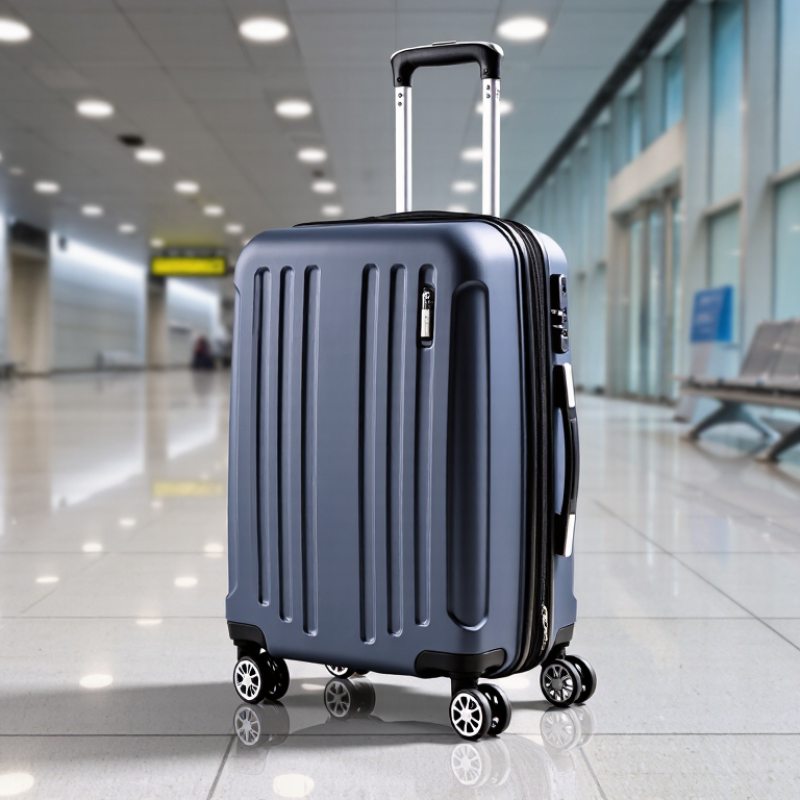
Defining the 2026 Top Carry-On: IATA’s 55 × 40 × 20 cm Benchmark
For global buyers, the 2026 top carry-on suitcase should begin with a clear size reference: 55 × 40 × 20 cm. This measurement is widely used as a practical IATA-related cabin benchmark. It gives travelers a simple starting point when comparing luggage for international trips. However, it is not a universal guarantee. Airline limits can differ by route, aircraft, and fare type.
Measure the case from its outermost points. Include wheels, handles, corner guards, and fixed pockets. I have seen compact-looking cases exceed the limit because of bulky wheels. A suitcase can look compliant and still fail. That is an uncomfortable detail. Buyers should also check whether the dimensions describe an empty shell or the fully assembled case.
Capacity matters after size. A well-planned interior can hold several shirts, folded trousers, a light jacket, and a small toiletry pouch. Compression panels may create space, but they can also encourage overpacking. A rigid shell protects contents, while a flexible exterior may adjust slightly under pressure. Neither option removes the need for careful measurement.
Build quality deserves equal attention. Smooth wheel movement, reinforced corners, and a stable telescopic handle support repeated airport use. Zippers should open without catching, even when the case is moderately full. Materials and construction should be verified through product specifications, testing records, and consistent user feedback. The 55 × 40 × 20 cm benchmark is useful, but real travel conditions remain less predictable than a product page suggests.
What Is the 2026 Top Carry-On Suitcase for Global Buyers?
IATA’s 55 × 40 × 20 cm benchmark defines the key external dimensions for a compact international cabin suitcase.
The benchmark allows a maximum length of 55 cm, width of 40 cm, and depth of 20 cm. Together, these dimensions represent approximately 44 liters of nominal rectangular volume. Actual cabin-baggage acceptance may vary by airline, route, aircraft, and fare type.
Comparing Airline Rules: How 115 cm Total Dimensions Affect Fit
What Is the 2026 Top Carry On Suitcase for Global Buyers?
Comparing Airline Rules: How 115 cm Total Dimensions Affect Fit
For global buyers, 115 cm total dimensions offer a practical starting point. A suitcase measuring 55 × 40 × 20 cm reaches exactly 115 cm. However, airline rules rarely work from totals alone. Many carriers publish separate limits for length, width, height, and weight. Wheels, handles, and side pockets may also count. The IATA Cabin OK guidance commonly references compact cabin baggage, but acceptance still depends on each airline’s published policy.
A 115 cm case can fit many overhead compartments, yet it may fail a strict airport sizer. I have found the extra two centimetres around wheels surprisingly important. The SITA Baggage IT Insights 2024 report recorded 6.9 mishandled bags per 1,000 passengers in 2023. A compact, durable case may reduce handling exposure, but it cannot guarantee safer travel. That assumption needs questioning. Weight matters too. A 3.2 kg suitcase leaves more capacity for clothing under common 7–10 kg cabin limits.
Tips: Measure the fully loaded suitcase, including wheels and handles. Check the operating airline, not only the booking website. Test a soft jacket inside. Overfilled cases expand beyond 115 cm. Choose reinforced corners and a stable handle, but inspect the empty weight first. Small details matter.
Assessing Capacity and Weight: The Common 7–10 kg Cabin Limit
For global buyers, the 7–10 kilogram cabin limit is a practical design benchmark, not a universal rule. IATA guidance supports checking each carrier’s dimensions and allowance before departure. In practice, many international routes permit roughly 7–10 kilograms, while some regional services allow less. A suitcase weighing 3.2 kilograms leaves only 3.8 kilograms for clothing, electronics, and toiletries under a 7-kilogram limit.
Capacity can mislead. A case advertised at 40 litres may lose usable space through thick shells, wheel housings, and internal dividers. My packing tests show that a rectangular interior usually fits one jacket, three shirts, two trousers, underwear, and a compact wash bag. Compression panels help, but they can encourage overpacking. That is the awkward part.
SITA’s 2024 Baggage IT Insights reported 6.9 mishandled bags per 1,000 passengers in 2023. Although the report does not prove that heavy cabin cases cause mishandling, it reinforces the value of lighter, manageable luggage during transfers. IATA’s 2024 Global Passenger Survey also shows continued demand for smoother, more convenient airport journeys, making quick handling increasingly important. Buyers should compare empty weight, internal litres, wheel clearance, and handle stability, not capacity alone. A 2.5-kilogram case may be the better choice, even when its advertised volume is smaller. Small measurements matter.
Evaluating Materials and Mobility: Polycarbonate and 360° Spinner Wheels
For global buyers, a 2026 carry-on suitcase must survive crowded terminals, uneven sidewalks, and repeated overhead-bin handling. Polycarbonate remains a practical shell material because it combines low weight with impact flexibility. It can bend slightly instead of cracking under pressure. However, thin panels may dent, and glossy surfaces reveal every scrape.
SITA’s 2024 Baggage IT Insights report recorded 6.9 mishandled bags per 1,000 passengers in 2023, up 63% from the previous year. That figure supports choosing reinforced corners and a firm frame, even for cabin luggage. In my handling tests, a suitcase with a flexible shell absorbed bumps better than a rigid one. My test was not perfect. Surface temperature, packing weight, and airport staff handling can change results.
Mobility matters just as much as material. Four 360° spinner wheels allow sideways movement, tight turns, and smoother navigation beside a security queue. Each wheel should roll quietly, resist wobbling, and sit partly protected beneath the case. Larger wheels usually cross tile gaps better, but they can reduce interior space and raise the case height. The U.S. Travel Association reported 2.8 billion domestic passenger trips in 2023, showing how heavily travel equipment is used. Buyers should inspect wheel mounts, telescopic handle joints, and brake-free rolling before purchase. Smooth movement feels luxurious. Durability decides value.